
Cookline Degreasing
Grease is removed from accessible equipment exteriors, backsplashes, ledges, legs, and nearby washable surfaces. The exact scope identifies which equipment can be moved safely and which areas remain excluded.
Serving Peoria, Illinois & surrounding areas
Open 24/7
Keep your kitchen ready for service with a practical cleaning plan built around your equipment, operating hours, and sanitation priorities.
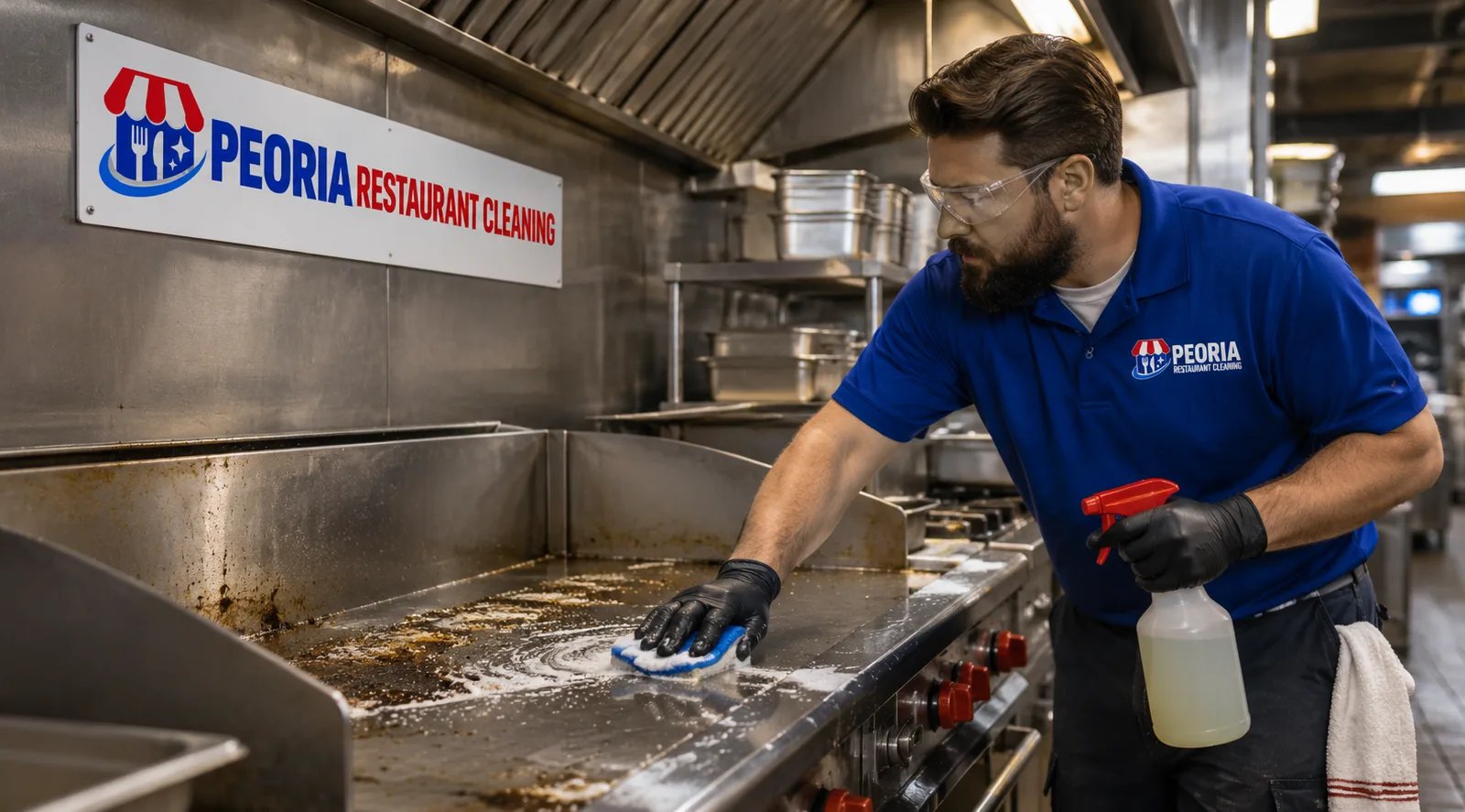
Commercial Kitchen Cleaning East Peoria restaurants can rely on starts with a defined scope. Cooking volume, menu, equipment layout, floor condition, and operating schedule all affect what needs attention and how often it should be cleaned. Peoria Restaurant Cleaning develops practical plans for independent restaurants, bars, cafés, institutional kitchens, and other food-service operations.
Our work can address recurring sanitation needs as well as periodic deep cleaning. With clear priorities, Peoria's trusted restaurant team coordinates the work around prep, service, deliveries, and closing duties so cleaners are not competing with kitchen staff for the same space. The result is a repeatable routine rather than a vague promise to clean everything.
East Peoria kitchens near the riverfront and Levee District may operate around busy dining periods, events, and varied closing times. Across the Illinois River, our Peoria base at 428 SW Washington St provides a practical starting point for serving commercial kitchens in East Peoria. Winter road salt and tracked moisture can also create extra floor-care needs near employee and delivery entrances, while humid summer conditions make prompt attention to organic residue and floor drains especially sensible.
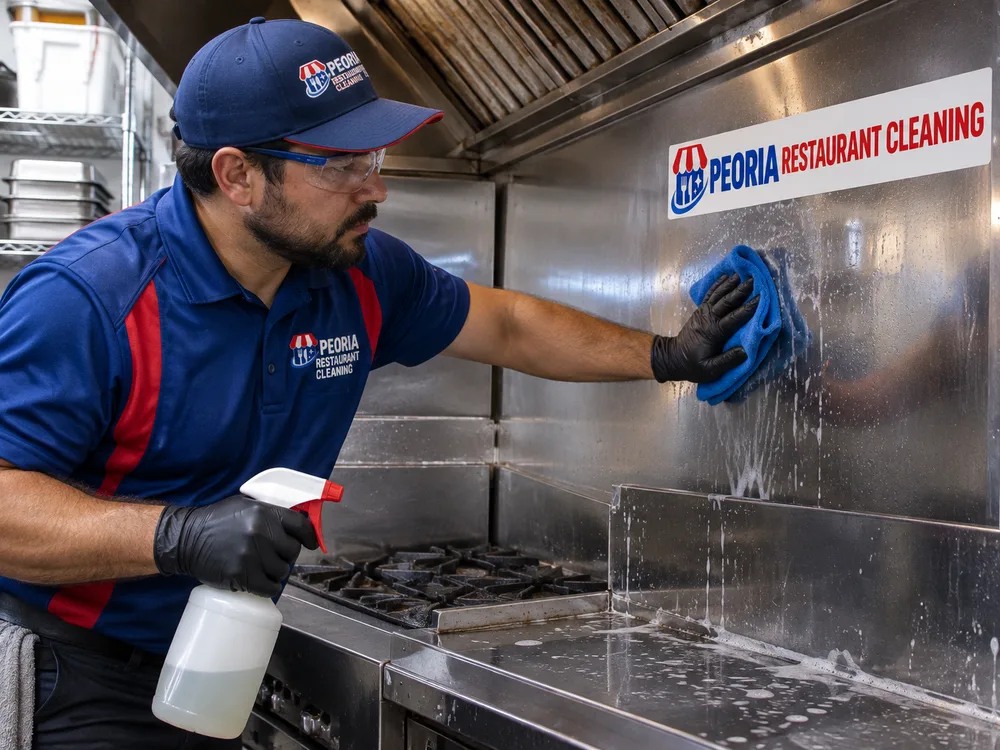
A commercial kitchen has several cleaning zones, and each requires the right method. Food-contact surfaces need procedures that respect the required clean, rinse, and sanitize sequence. Non-food-contact areas such as equipment sides, wall surfaces, legs, casters, and shelving collect grease and debris that routine closing work may miss.
A typical scope may include cookline exteriors, backsplash areas, stainless steel preparation surfaces, sinks, washable walls, shelving, reach-in exteriors, rubber floor mats, base edges, and floors beneath movable equipment. Degreasing products require the correct dwell time, and residue must be removed according to the product label. Sanitizers also need the labeled concentration and contact time. Test strips should be used when the product requires concentration verification.
Cleaning should protect equipment rather than damage it. Abrasive pads can scratch stainless steel, excess water can reach electrical components, and incompatible chemicals can harm aluminum or finished surfaces. Our team confirms surface compatibility and access limits before work begins. Hood ducts, fire-suppression components, grease traps, pest control, and equipment repair are separate specialist scopes unless specifically included by a qualified provider.
Grease is removed from accessible equipment exteriors, backsplashes, ledges, legs, and nearby washable surfaces. The exact scope identifies which equipment can be moved safely and which areas remain excluded.
Floor care addresses grease film, food debris, corners, base edges, and accessible spaces beneath equipment. Appropriate cleaning chemistry and controlled water use help reduce slippery residue without flooding the work area.
Accessible tables, sink surrounds, shelving, reach-in exteriors, and non-food-contact surfaces can be cleaned after food, utensils, and portable items are removed or protected.
Handles, push plates, switches, faucet controls, and other frequently touched points receive focused attention with products suitable for the surface.
When included in the written scope, restaurant cleaning can extend to restrooms, entry floors, service stations, and employee areas while keeping kitchen work as the central priority.
Periodic work can target buildup behind movable equipment, on wall surfaces, around floor drains, and in other accessible areas that are difficult to address during a normal closing shift.
We review the cookline, preparation areas, storage zones, floors, access points, and operating schedule. This is also the time to identify delicate finishes, damaged surfaces, equipment that cannot be moved, and areas handled by specialist vendors.
The plan states which rooms, surfaces, and equipment exteriors are included. It also records exclusions, preparation duties, access arrangements, preferred timing, and whether the work is a one-time deep clean or recurring service.
Food and clean utensils are removed, sealed, or protected as appropriate. Equipment is shut down and cooled when required, and cleaners verify product compatibility before applying degreasers, detergents, or sanitizers.
Work generally proceeds from higher surfaces to lower ones and from cleaner zones toward dirtier zones. Grease and soil are loosened with suitable chemistry, given the required dwell time, agitated where needed, and removed without spreading residue.
The finished areas are checked against the agreed scope. Any access limits or maintenance concerns noticed during cleaning are documented so the operator can decide what needs follow-up.
The right frequency depends on cooking volume, grease production, foot traffic, and the effectiveness of daily closing procedures. A high-output fryer line may need more frequent degreasing than a light-preparation café. Entry floors can also require added attention during central Illinois winters because moisture, grit, and deicing residue are carried indoors.
Recurring service is useful for predictable tasks such as cookline exterior cleaning, floor scrubbing, edge work, and high-touch surfaces. Periodic deep cleaning can be added for accessible wall areas, shelving, floor drains, and spaces behind equipment. One-time cleaning may suit a reopening, management change, seasonal reset, or recovery from deferred maintenance.
Timing matters as much as frequency. Work may be arranged after closing, before prep begins, or during an agreed shutdown window. The kitchen must allow enough time for equipment to cool, surfaces to be cleaned correctly, and required product contact times to be completed before food preparation resumes. A walkthrough helps establish a realistic duration for the actual layout and condition.
Ask for a scope that names surfaces and equipment rather than using broad terms such as “deep clean.” A useful proposal distinguishes food-contact surfaces from non-food-contact areas, states whether floors and drains are included, and identifies equipment that the crew may move. It should also explain who removes food, utensils, small appliances, and floor mats before work starts.
Chemical handling deserves direct questions. The cleaner should follow product labels for dilution, surface compatibility, personal protective equipment, dwell time, rinsing, and sanitizer contact time. Safety Data Sheets should be available for workplace chemicals. Products must never be mixed unless their labels expressly permit it, and the kitchen should have adequate ventilation for the work being performed.
Commercial cleaning supports a restaurant's sanitation program, but it does not replace staff food-safety duties or required inspections. The Tazewell County Health Department is the relevant local authority for food establishment oversight in East Peoria, so operators should follow its current requirements along with the Illinois Food Code and the instructions for their equipment and chemical products.
Peoria Restaurant Cleaning can build the service around a defined checklist and agreed access window. Before work starts, confirm the scope, frequency, preparation responsibilities, exclusions, and process for reporting damaged or inaccessible areas.
Request a CallbackA kitchen walkthrough can turn recurring grease, floor, and sanitation concerns into a clear cleaning scope that works with your service schedule.
Call for a Free QuoteCommercial kitchen cleaning in East Peoria is priced after reviewing the kitchen's size, condition, equipment density, and requested scope. A lightly soiled preparation kitchen differs greatly from a grease-heavy cookline with buildup behind equipment. Frequency, after-hours access, floor treatment, movable equipment, and food or utensil preparation duties also affect labor. A walkthrough allows Peoria Restaurant Cleaning to provide a written scope and price based on the actual facility.
Yes, after-hours work can be planned when access, cooling time, security, and reopening requirements are agreed in advance. Busy East Peoria dining operations often need cleaning to begin only after the final service and closing duties are complete. The schedule must leave enough time for equipment to cool and for any labeled chemical dwell, rinse, or sanitizer contact time before the next preparation period.
The proper frequency depends on cooking volume, grease output, traffic, equipment access, and the quality of daily cleaning. Fryer and grill operations may need certain zones addressed more often than cafés with limited hot cooking. A practical plan separates daily staff duties, recurring professional cleaning, and less frequent deep-clean tasks. The schedule should be adjusted when visible buildup returns before the next planned visit.
Food, clean utensils, single-service items, and portable equipment generally need to be removed, sealed, or protected before cleaning begins. The written scope should assign that responsibility clearly. Clearing preparation surfaces and access routes also allows the crew to work efficiently and reduces the risk of chemical overspray or soil contacting protected items.
Hood and exhaust duct cleaning should be treated as a separate specialist scope unless it is expressly listed and performed by a qualified provider. Routine kitchen cleaning may cover accessible exterior hood surfaces, but internal plenums, fans, and ductwork require specialized access and procedures. Fire-suppression components should not be disturbed during general cleaning.
Deep cleaning is usually better scheduled outside active food preparation because chemicals, wet floors, moved equipment, and loosened soil can interfere with safe kitchen operations. Limited work in isolated support areas may be possible if the restaurant can maintain clear separation. The walkthrough determines whether zones can be closed safely or whether the whole kitchen needs a dedicated shutdown window.
Professional cleaning can address visible soil and buildup within the agreed scope, but it cannot guarantee an inspection outcome. East Peoria food establishments remain responsible for food temperatures, storage, employee practices, pest prevention, equipment condition, and other requirements overseen by the Tazewell County Health Department. Cleaning works best as one part of an ongoing sanitation and maintenance program.
Talk with our team
Tell Peoria Restaurant Cleaning about your space, operating hours, and cleaning priorities so we can help define the right scope.
Request a quote
After you submit the form, our team will review your details and contact you to discuss the space, schedule, and next steps.