
Dining Areas
Vacuuming, damp mopping, trash removal and cleaning of tables, chairs, ledges, doors and service stations prepare guest areas for the opening team.
Serving Peoria, Illinois & surrounding areas
Open 24/7
Start each service day with clean dining areas, sanitary restrooms and a kitchen ready for your opening crew through a dependable recurring schedule.
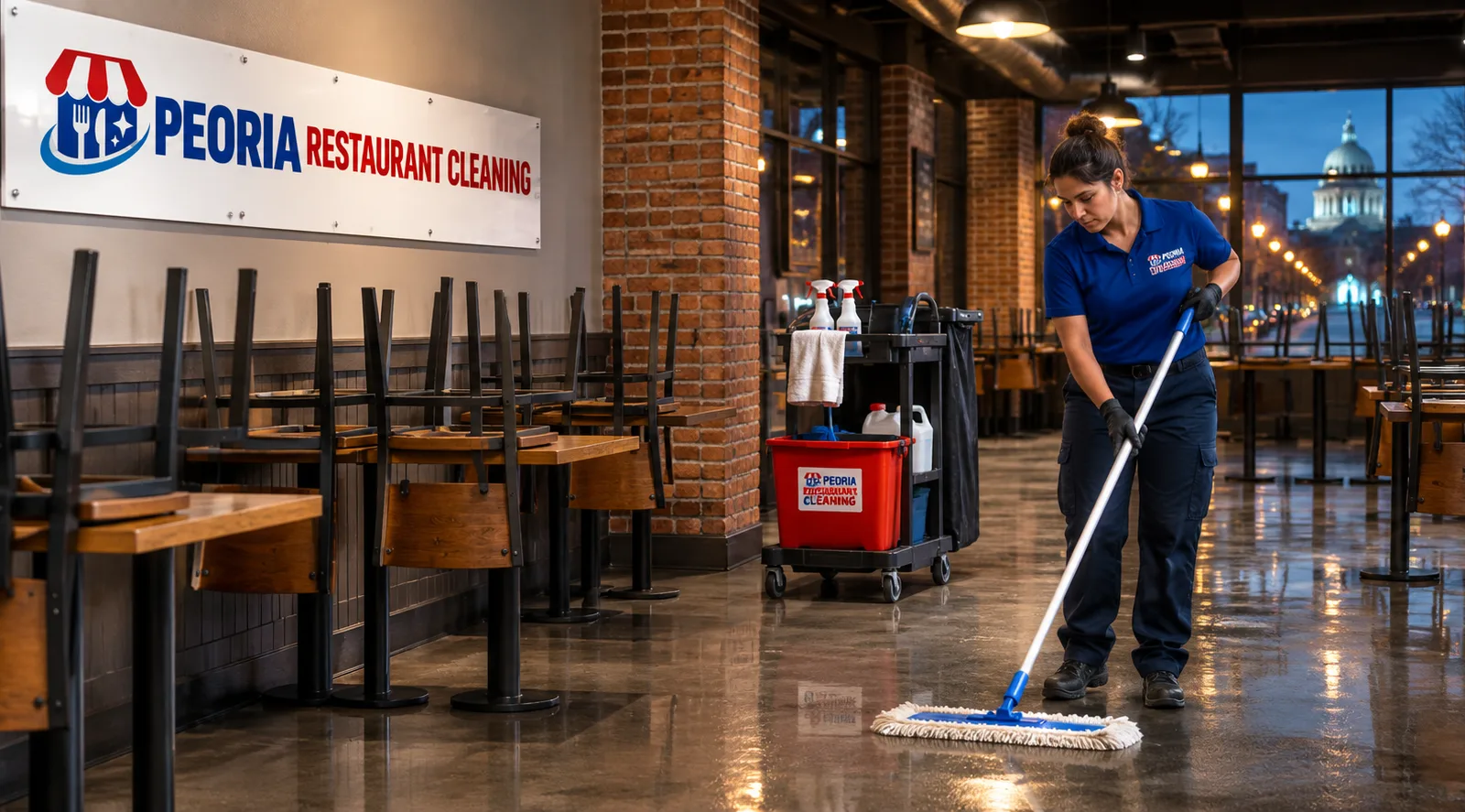
Overnight Restaurant Cleaning handles the work that cannot interrupt guests, servers or kitchen production. Once the final table is cleared and staff have finished their closing duties, the cleaning crew follows an agreed checklist for dining areas, restrooms, service stations and designated kitchen surfaces. The work is completed before the next shift arrives.
Peoria Restaurant Cleaning provides recurring care for independent restaurants, bars, cafés and multi-location operators. We are a professional restaurant company in Peoria that builds the scope around how each operation closes, where soil accumulates and which tasks belong to restaurant staff. That distinction matters. A written plan prevents duplicate work, missed areas and uncertainty about who handles waste, movable equipment or end-of-night access.
Our location on SW Washington Street is close to Downtown Peoria and the Warehouse District, where late service hours and mixed dining and entertainment traffic can require flexible entry arrangements. Restaurants near the Peoria Civic Center may also experience changing traffic tied to scheduled events. The overnight plan should account for the actual closing routine rather than impose the same start time on every business.
A restaurant janitorial cleaning scope should name the surfaces, tasks and frequency for every included area. Dining-room work may cover vacuuming or damp mopping, spot cleaning walls and doors, wiping tables and chair contact points, cleaning service stations, removing trash and restoring the room for opening. Entry glass and interior partitions can be added where fingerprints and food residue appear each day.
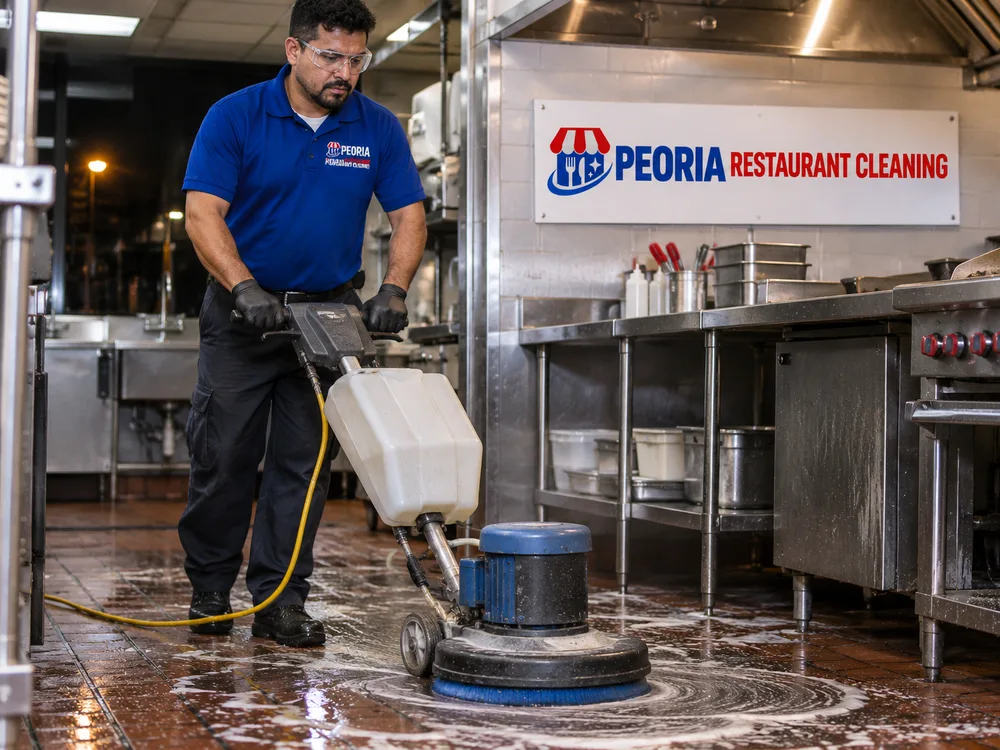
Kitchen janitorial work commonly focuses on accessible floors, floor edges, mats, waste areas, hand-contact surfaces and exterior faces of equipment. Grease requires the correct degreaser, dwell time and agitation rather than a quick pass with a wet mop. Cleaning personnel should never mix chemicals, and product labels and Safety Data Sheets guide dilution, protective equipment and surface compatibility. Food-contact surfaces require an approved cleaning and sanitizing process under the restaurant's operating procedures.
Recurring Restaurant Cleaning can also assign periodic work such as baseboard detailing, low-wall washing, deeper floor scrubbing and attention beneath movable items. Exhaust hood cleaning, grease-duct service and internal equipment cleaning are specialized tasks and should not be assumed unless they are expressly included in the written scope.
Vacuuming, damp mopping, trash removal and cleaning of tables, chairs, ledges, doors and service stations prepare guest areas for the opening team.
Loose debris is removed before the floor is cleaned. Grease-prone areas may need degreaser, proper dwell time, agitation and careful rinsing according to the product label.
Interior entry glass, door handles and nearby surfaces receive attention based on fingerprints, food residue and the amount of nightly traffic.
Included trash and recycling are removed to assigned collection points. Liners, container exteriors and surrounding floors can be addressed in the written scope.
Accessible counters, cabinet faces and touchpoints are wiped without disturbing stocked items, cash-handling equipment or operator-controlled supplies.
Baseboards, floor edges, low walls and hard-to-reach areas can rotate through a weekly or monthly schedule instead of being left until buildup is obvious.
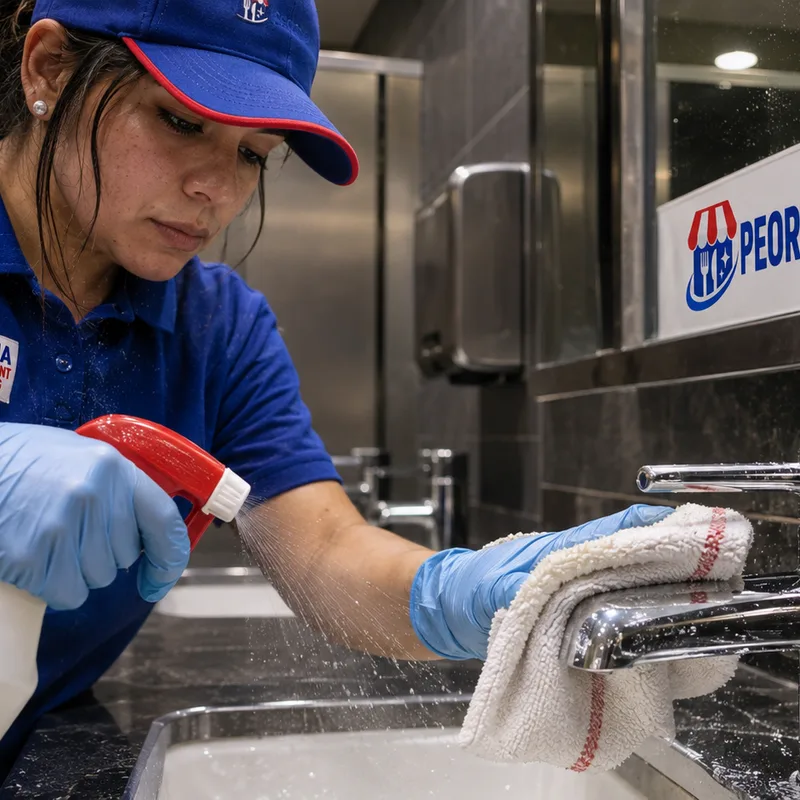
Restaurant Restroom Cleaning needs its own checklist because appearance, odor and supply levels affect the guest experience immediately. A nightly routine can include cleaning and disinfecting toilets and urinals, wiping partitions and dispensers, cleaning sinks and mirrors, removing waste and damp mopping floors. High-touch points such as handles, latches, faucets and flush controls receive focused attention.
Cleaning comes before disinfecting. Visible soil can interfere with a disinfectant, so the surface is cleaned first and then treated for the label's required contact time. Using the right product on fixtures also reduces the risk of damaging finishes. The crew should report leaks, loose hardware, persistent odors and empty dispensers rather than treating maintenance problems as cleaning failures.
Downtown restaurants and venues near the Civic Center can have sharp changes in restroom use when concerts, games or conventions affect customer volume. A recurring plan can set a standard nightly scope while allowing prearranged adjustments for known high-traffic dates. Supply restocking may be included when the restaurant identifies approved products and storage locations.
We review dining spaces, restrooms, kitchen access, flooring, waste routes and the closing routine. The walkthrough identifies grease conditions, sensitive surfaces and areas restaurant employees already clean.
The proposal separates nightly tasks from weekly or periodic work. It also records exclusions, supply responsibilities, access instructions and the expected completion window.
Management establishes approved entry, alarm and lockup procedures. Keys, codes and after-hours contacts are handled according to the agreed process rather than informal shift-to-shift instructions.
The crew follows the location-specific checklist after closing. Opening staff have a clear way to report an issue so it can be documented and addressed.
Changes in hours, menus, floor conditions or customer volume may change the workload. Periodic reviews keep staffing, frequencies and expectations aligned with actual conditions.
A dependable Restaurant Janitorial Company should inspect the operation before setting the scope. Square footage matters, but it does not describe grease accumulation, table density, floor material, restroom use, closing times or the distance to the waste collection area. Those details determine labor and equipment needs.
Ask who supervises the work, how quality concerns are recorded and whether the proposal identifies tasks that remain with restaurant employees. Confirm how the crew handles chemical dilution, color-coded cloths or tools, wet-floor controls and cross-contamination risks. Clean tools used in restrooms should not be carried directly into food-service areas. A sensible sequence and separate equipment help protect the work already completed.
Seasonal conditions also affect Nightly Restaurant Cleaning in Peoria. Winter snow, slush and deicing residue can increase entry-floor soil, while rainy periods carry more moisture indoors. Entry mat care, more frequent soil removal and suitable floor-cleaning methods help prevent residue from spreading through the dining room. Restaurants around Northwoods Mall or the commercial corridors along Knoxville Avenue may have different closing patterns and parking access than compact Downtown operations, so arrival and lockup procedures should be location-specific.
Peoria Restaurant Cleaning is based at 428 SW Washington St, Suite 4, Peoria, IL 61602. A site walkthrough allows the cleaning plan to reflect the building, the operating schedule and the standards your opening manager expects.
Recurring restaurant janitorial service is priced after a walkthrough because the number of visits is only one part of the workload. The estimate considers cleanable square footage, dining-room layout, restroom fixture count, flooring, kitchen grease conditions, closing window, security procedures, waste handling and the frequency of periodic detail work.
A clear proposal should state whether chemicals, liners, paper products and restroom consumables are supplied by the restaurant or the cleaning company. It should also distinguish routine nightly work from initial cleanup or corrective work. A restaurant with existing floor buildup may need a separate reset before a maintenance schedule can keep the surface at the agreed condition.
The most useful comparison is the complete written scope, not a single monthly figure. Two proposals can appear similar while assigning different frequencies to restrooms, floor edges, glass or kitchen work. Peoria Restaurant Cleaning confirms the schedule and exact price after inspecting the restaurant and discussing access with management.
Request a CallbackGet a written overnight scope built around your closing time, floor conditions, restroom needs and opening expectations.
Call for a Free QuoteYes, the service window is set around your closing and opening times after the workload has been inspected. The plan accounts for dining-room reset, restroom cleaning, kitchen-floor needs and secure lockup. Late operations in Downtown Peoria may require a different arrival time than restaurants that close earlier along major commercial corridors.
A daily schedule can be proposed when the restaurant needs service after every operating day. Availability depends on the location, access window, scope and staffing requirements. The written agreement should identify service days and procedures for holidays, temporary closures or changes in operating hours.
Price is driven by labor time, visit frequency and the actual condition of the restaurant. Cleanable floor area, table density, restroom fixtures, grease levels, flooring, waste routes, supply responsibilities and the length of the overnight window all affect the estimate. An initial cleanup may be quoted separately when heavy buildup exists.
Accessible exterior equipment surfaces may be included, but internal equipment and exhaust-system cleaning are not assumed. Hood, fan and grease-duct cleaning is specialized work. The walkthrough identifies boundaries so the restaurant's staff, janitorial crew and specialty vendors have clearly assigned responsibilities.
Yes, prearranged adjustments can account for expected increases in dining-room and restroom use. Restaurants near the Peoria Civic Center may want extra floor, waste or restroom attention after major events. Schedule changes should be requested in advance so the additional work and completion window can be confirmed.
Supply responsibility is decided before service starts and recorded in the proposal. The restaurant may provide approved consumables, or selected items may be included in the cleaning scope. Product labels, storage locations and Safety Data Sheets should remain accessible to the people who handle the chemicals.
The restaurant should have a direct reporting process that identifies the location, task and service date. Specific feedback allows supervision to verify the checklist, correct the issue and determine whether the scope or training needs adjustment. Opening managers should report concerns promptly, before normal restaurant activity changes the condition.
Talk with our team
Tell Peoria Restaurant Cleaning about your space, operating hours, and cleaning priorities so we can help define the right scope.
Request a quote
After you submit the form, our team will review your details and contact you to discuss the space, schedule, and next steps.