
High-Touch Disinfection
Frequently handled points are cleaned and treated with an appropriate disinfectant according to label directions, including the required contact time.
Serving Peoria, Illinois & surrounding areas
Open 24/7
Give guests and staff a restroom that looks cared for, smells fresh, and is ready for every shift with detailed cleaning built around your operating hours.
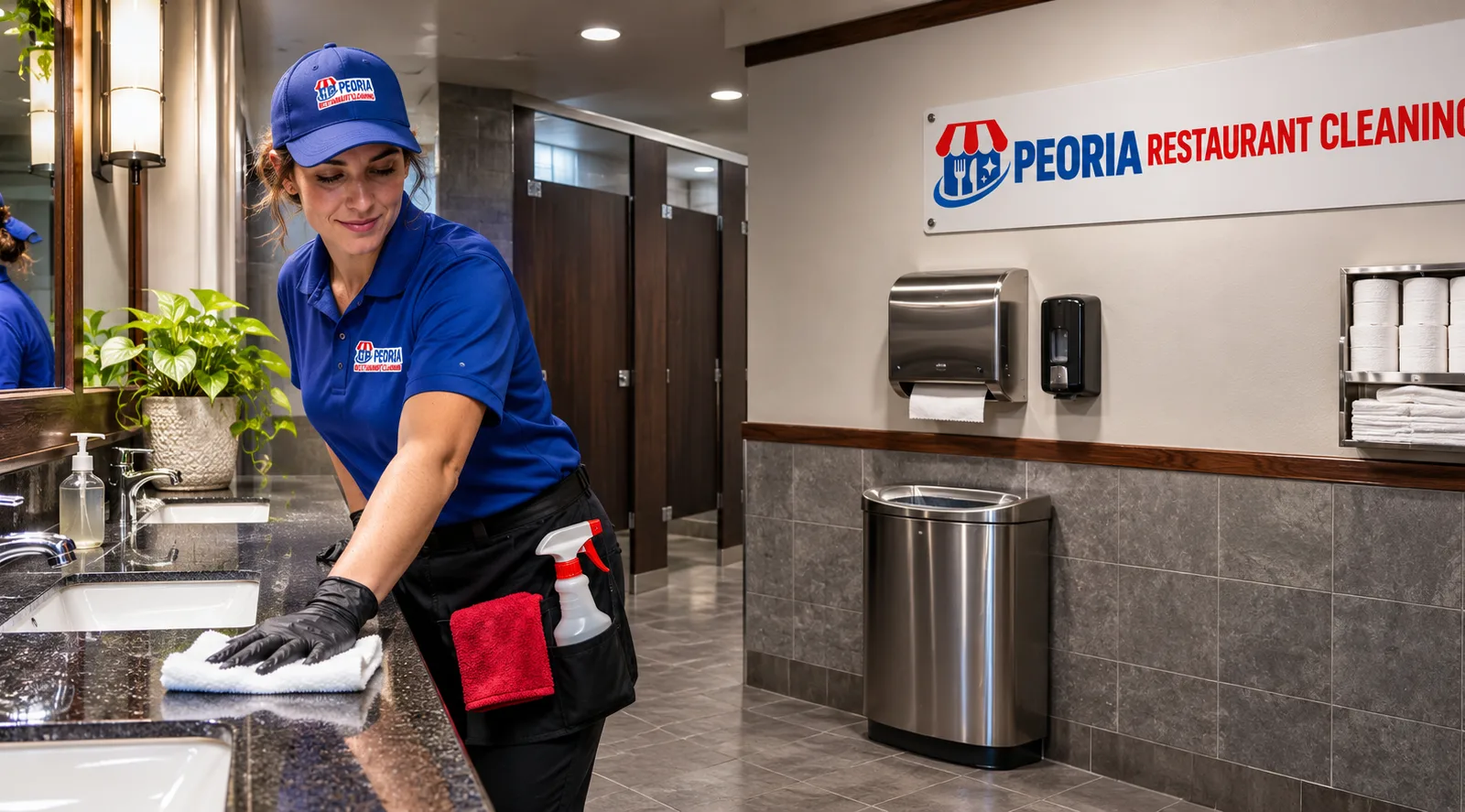
Restaurant Bathroom Cleaning Bartonville requires more than a quick mop and a wipe around the sink. Guests notice odors, streaked mirrors, overflowing waste containers, empty dispensers, dirty grout, and residue around toilets. These details can shape their impression of the entire restaurant.
Peoria Restaurant Cleaning handles the high-touch surfaces and hard-to-reach areas that routine shift checks can miss. Our work can include toilets, urinals, partitions, sinks, faucets, counters, mirrors, dispensers, door handles, grab bars, walls, baseboards, floors, drains, and waste containers. The scope is adjusted to the room, fixture count, traffic, and condition rather than forced into a generic checklist.
Working as restaurant specialists serving Peoria, we understand that restroom care must fit around food service, employees, deliveries, and guests. Our team operates from Peoria and serves nearby Bartonville restaurants with a clear scope and a schedule suited to their business hours.
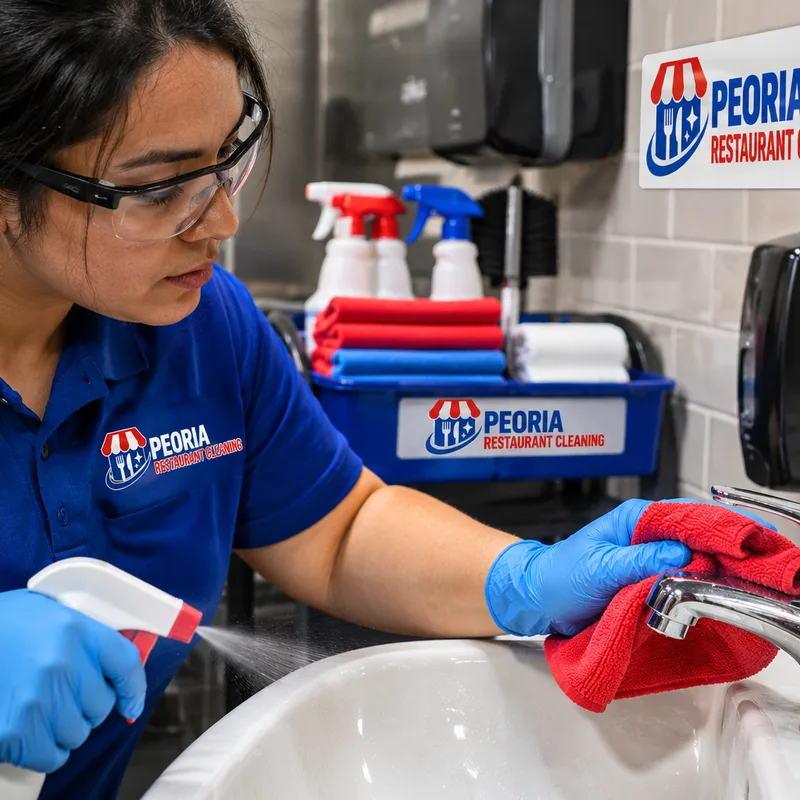
A dependable cleaning plan addresses both visible soil and the places where germs are commonly transferred. High-touch disinfection focuses on faucet handles, flush controls, latches, door pulls, soap dispensers, hand dryers, and accessible grab bars. Surfaces are cleaned before disinfectant is applied, and the product must remain wet for its labeled contact time.
Fixture cleaning removes soap film, mineral residue, fingerprints, splash marks, and buildup around bases and mounting points. Mirrors and polished surfaces are finished without haze. Partitions, doors, walls, and baseboards receive attention based on their material and condition.
Floor care includes debris removal, edge and corner cleaning, wet mopping, and treatment around toilets and urinals. Crews use separate restroom tools and color-coded microfiber where appropriate to limit cross-contamination. Wet-floor controls remain in place until the surface is safe for normal use. Supply checks and waste removal can also be added to the written scope.
Frequently handled points are cleaned and treated with an appropriate disinfectant according to label directions, including the required contact time.
Cleaning targets residue around fixture bases, floor edges, waste containers, partitions, and other sources instead of covering odors with heavy fragrance.
Products and tools are selected for porcelain, stainless steel, glass, laminate, tile, sealed grout, and other restroom materials.
Corners, edges, grout lines, and areas behind or around fixtures receive focused attention rather than a fast pass through the open floor.
The agreed routine can include emptying waste containers and checking soap, paper towels, toilet tissue, and liners.
Managers know which tasks are completed on each visit and which periodic details are scheduled separately.
We assess the number of restrooms, stalls, urinals, sinks, dispensers, floor materials, access points, and current soil level. Recurring trouble spots such as grout buildup or persistent odor are identified.
The plan states what is cleaned on every visit, what is handled periodically, and when the crew can work without interfering with guests. Early morning, after-closing, or other agreed service windows may be considered.
Crews remove debris, clean touchpoints and fixtures, address partitions and lower surfaces, empty waste, and finish with the floor. Cleaning before disinfection helps the disinfectant reach the surface.
The final check covers mirrors, dispensers, fixture bases, corners, waste containers, odors, and floor condition. Any issue outside the normal scope can be reported to management.
Bartonville restaurants often need restroom work completed outside the busiest meal periods. A practical schedule accounts for opening and closing duties, staff access, customer traffic, and the time disinfectants need to remain wet. The goal is to return the room in a clean, dry, usable condition without disrupting service.
Central Illinois weather also affects restroom floors. Rain, winter slush, and deicing residue can be tracked through dining areas and into restrooms, leaving grit or a dull film. Cleaning frequency may need to increase during wet or snowy periods, especially near entrances or in compact dining rooms where the route to the restroom receives steady traffic.
A restaurant near heavily traveled corridors may face different traffic patterns than a smaller neighborhood dining room, so visit frequency should follow actual use. Daily service, several visits per week, or scheduled deep cleaning can be considered after the room and operating schedule are reviewed.
Recurring service keeps visible soil, waste, fingerprints, and common touchpoints under control. Periodic deep cleaning reaches slower-forming buildup along grout lines, floor edges, partition hardware, wall splash zones, fixture bases, vents, and other details that do not always require the same frequency.
The right interval depends on guest volume, operating hours, fixture count, floor type, ventilation, and how often employees inspect the room between professional visits. A high-traffic restroom may need frequent cleaning plus periodic detail work. A lower-volume room may need fewer visits but still benefit from scheduled deep cleaning so residue does not become difficult to remove.
Some problems require maintenance rather than additional cleaning. Recurring sewer-like odors, loose fixtures, leaking supply lines, failed caulk, damaged grout, and slow drains should be reported for repair. Cleaning can remove soil around those areas, but it cannot correct plumbing defects or deteriorated materials.
Request a CallbackA walkthrough can turn recurring restroom complaints into a clear task list, suitable service frequency, and cleaning schedule that works around your restaurant's busiest hours.
Call for a Free QuotePricing is usually based on restroom count, fixture count, cleaning frequency, current condition, access, and whether supplies or periodic deep cleaning are included. A compact single-restroom restaurant requires a different scope than a location with multiple guest and employee restrooms. After reviewing the rooms and service window, Peoria Restaurant Cleaning can provide a written scope and pricing tied to the actual work.
Yes, after-closing or other low-traffic service may be available when it fits the agreed schedule. The timing should allow enough access for cleaning, disinfectant contact time, floor drying, and a final inspection before the building is secured or reopened.
Frequency should be based on guest traffic, operating hours, fixture count, and the condition found between visits. Busy locations may need daily professional service, while lower-volume restaurants may choose several visits per week with staff checks between them. Wet Central Illinois weather can also increase tracked-in soil and the need for floor care.
Employee restrooms can be included in the scope along with guest facilities. The walkthrough identifies every room to be serviced, any access restrictions, and whether staff-only areas require a different schedule.
Restocking checks can be included, but the exact arrangement must be stated in the service scope. Some restaurants provide their preferred soap, paper towels, toilet tissue, and liners, while others want supply handling discussed as part of the cleaning plan.
Cleaning can address odors caused by residue, waste containers, grout, floor edges, and buildup around fixtures. If an odor returns quickly after detailed cleaning, it may point to a dry trap, drain issue, leak, failed seal, or ventilation problem that requires maintenance.
The walkthrough records room size, stalls, urinals, sinks, dispensers, surface materials, soil level, access, and preferred service times. It also separates recurring tasks from periodic detail work, giving the restaurant a defined scope before service begins.
Talk with our team
Tell Peoria Restaurant Cleaning about your space, operating hours, and cleaning priorities so we can help define the right scope.
Request a quote
After you submit the form, our team will review your details and contact you to discuss the space, schedule, and next steps.