
Cookline Exteriors
Grease collects on range fronts, fryer exteriors, control surrounds, equipment sides, legs, and casters. Cleaning methods are selected for the finish and kept clear of sensitive components.
Serving Peoria, Illinois & surrounding areas
Open 24/7
Detailed degreasing, high dusting, and sanitation planned around your kitchen's equipment, operating hours, and highest-priority cleaning needs.
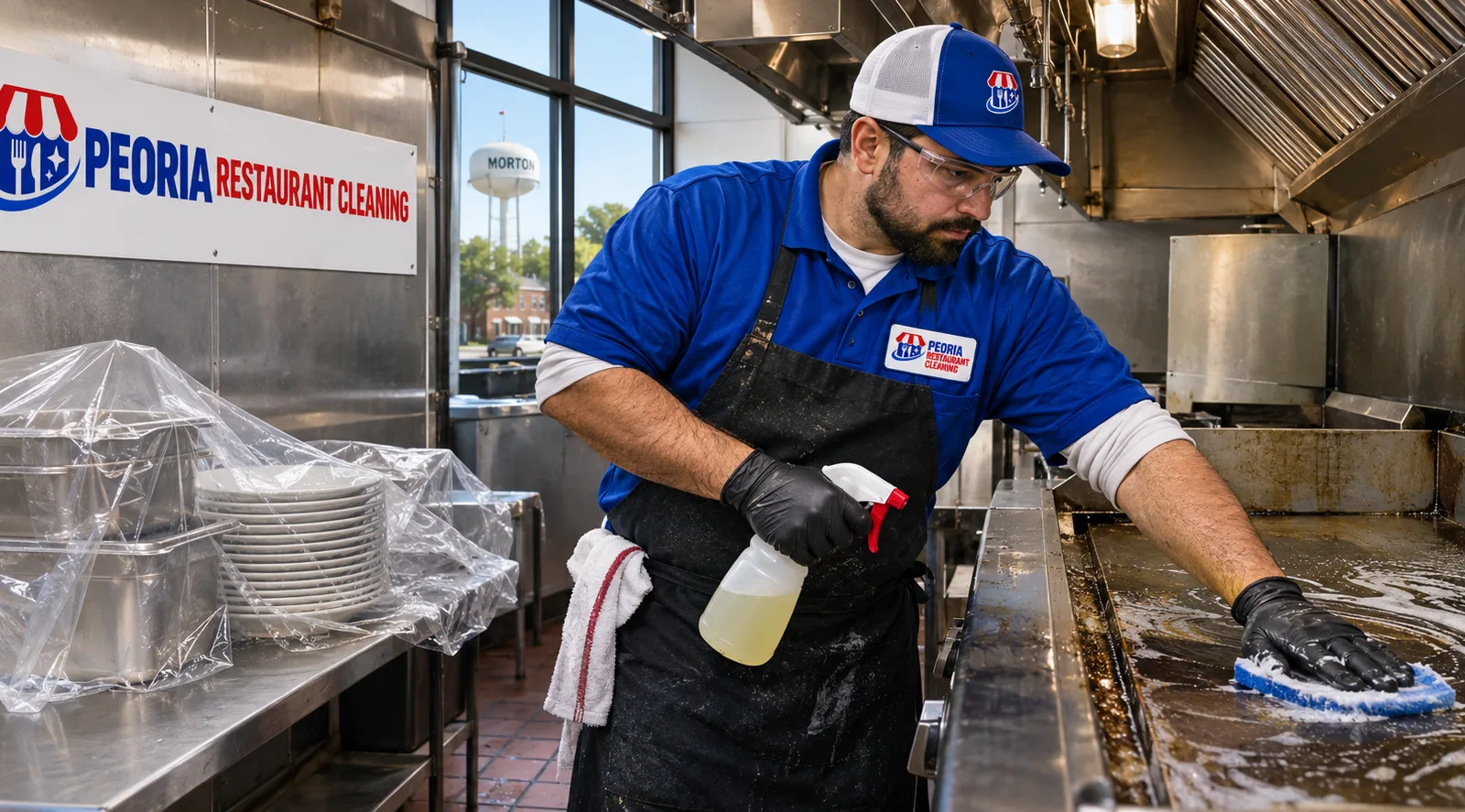
Restaurant Kitchen Cleaning Morton businesses can schedule for detailed work should address the grease, dust, crumbs, and residue that routine closing duties do not fully remove. Peoria Restaurant Cleaning develops a written scope around the kitchen's equipment, access limits, current condition, and operating schedule. That may include degreasing equipment exteriors, cleaning walls and floors, detailing hard-to-reach surfaces, and sanitizing specified touchpoints.
Our work starts with a practical review rather than a generic checklist. The crew identifies sensitive controls, hot surfaces, electrical components, food-contact areas, and equipment that can or cannot be moved. We are an experienced restaurant team in Peoria, IL that plans the work for commercial food-service conditions and travels from our Peoria base to serve Morton facilities.
Morton's restaurant market includes independent dining rooms, quick-service kitchens, bars, cafés, and institutional food operations. A compact kitchen near Morton's commercial corridors may need careful sequencing because several stations share limited floor space. A larger operation near the Interstate 74 corridor may place more emphasis on service-window timing and traffic through receiving or storage areas. The cleaning plan should fit the actual workflow rather than interrupt it.
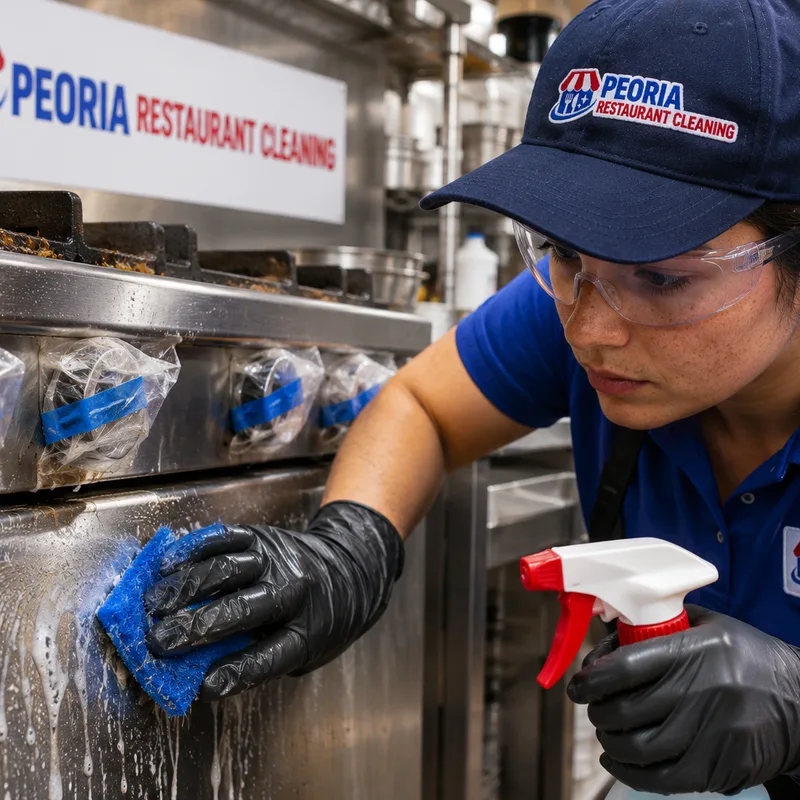
The scope can include cookline equipment exteriors, prep tables, sinks, backsplashes, washable wall surfaces, shelving, floor edges, drains, casters, legs, and the spaces beneath accessible equipment. Degreasers need suitable dwell time to loosen buildup before agitation and removal. Stainless steel is cleaned with non-scratching tools, and moisture is controlled around switches, thermostats, motors, and electrical connections.
Food-contact surfaces require special handling. Cleaning removes soil, while sanitizing follows with a product labeled for the surface and application. The product's required concentration, contact time, and rinsing directions govern its use. Sanitizer should never be treated as a substitute for removing grease and food residue first.
Exhaust hood interiors, filters, ducts, and fans may require specialized exhaust-system service rather than general kitchen cleaning. We define that boundary before work begins so the written scope accurately states what will be cleaned. Pest treatment, equipment repair, and drain repair are also separate from cleaning, although visible concerns can be documented for the operator.
Grease collects on range fronts, fryer exteriors, control surrounds, equipment sides, legs, and casters. Cleaning methods are selected for the finish and kept clear of sensitive components.
Washable vertical surfaces can hold aerosolized grease and splatter behind prep and cooking stations. Soil is loosened, agitated, and removed without spreading residue to clean areas.
Attention goes to perimeter lines, corners, grout, transitions, and accessible spaces beneath equipment. Loose debris is removed before wet cleaning so it does not turn into slurry.
Accessible shelves and racks are cleaned according to the agreed scope. Food, utensils, chemicals, and disposable goods must be moved or protected before work begins.
Handles, push plates, switches, and other specified touchpoints can be cleaned and sanitized with products appropriate for their materials and use.
Equipment gaps, pipe runs, ledges, and overhead surfaces are evaluated for safe access. Items that cannot be reached safely are identified before the crew starts.
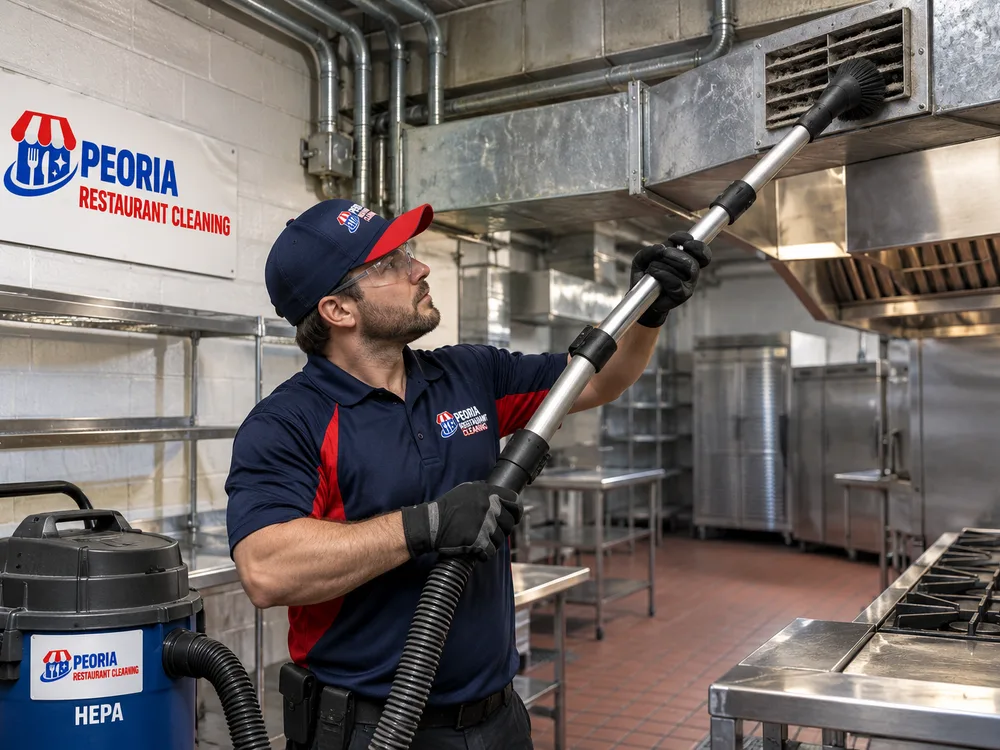
Restaurant High Dusting Morton facilities request targets overhead soil on accessible ceiling vents, pipes, conduit, ledges, beams, light exteriors, and the tops of equipment or partitions. Dust can combine with airborne grease and form a sticky film that ordinary dusting does not lift. The method may involve HEPA-filtered vacuuming, controlled wiping, or degreasing where the surface allows it.
High work requires more than a long-handled duster. The crew reviews ceiling height, obstacles, safe ladder placement, and the activity taking place beneath the work zone. Preparation can include covering or removing exposed food, clean utensils, packaging, and small equipment. Dust is captured rather than brushed into prep areas.
Seasonal heating and cooling in central Illinois can increase attention on vents and other overhead surfaces, particularly after long periods of HVAC use. High dusting is commonly scheduled during a shutdown window so the work zone can be isolated and lower surfaces can receive a final cleanup after the overhead work is complete.
We discuss the facility type, operating hours, recent cleaning history, problem areas, and access. Photos or an on-site walkthrough may be used to identify equipment, overhead work, and surfaces requiring special care.
The plan lists included areas, exclusions, preparation responsibilities, timing, and any access equipment needed. It also separates general kitchen cleaning from exhaust-system work, repairs, and pest services.
Food and clean wares are removed or covered as appropriate. Equipment is shut down and cooled when the task requires it, and sensitive controls or nearby areas are protected.
Work generally progresses from overhead and less-soiled areas toward lower and heavier-soiled surfaces. Degreasers are given suitable dwell time, residue is removed, and specified surfaces are sanitized after cleaning.
The crew checks the completed scope, removes protective materials, and notes any area that could not be accessed safely. Recurring schedules can then be adjusted to the kitchen's actual buildup.
A useful cleaning proposal should state what is included instead of relying on broad terms such as “deep clean.” Two Morton kitchens of similar size can require very different labor. A fryer line with old polymerized grease, crowded equipment gaps, and overhead conduit takes a different approach than a lightly used prep kitchen with open access.
Preparation also affects the service window. Managers should identify equipment that staff may move, confirm shutdown and cool-down times, and decide where food, utensils, and smallwares will be stored. If equipment is connected to gas, water, or electrical service, it should not be disconnected or shifted unless an authorized person has approved the work. Heavy equipment is cleaned in place when moving it would be unsafe or outside the agreed scope.
Peoria Restaurant Cleaning can plan a one-time detailed cleaning, a periodic high-dusting visit, or recurring service based on observed buildup. Recurring frequency is not universal. Cooking volume, menu, ventilation, floor traffic, and the facility's daily cleaning program all affect how quickly soil returns.
Describe your kitchen, operating schedule, and priority areas to receive a cleaning plan with clear inclusions, preparation needs, and timing.
Call for a Free QuotePricing is based on labor, kitchen size, soil level, access, equipment density, overhead height, and the requested service window. A lightly soiled prep area is different from a crowded cookline with hardened grease and limited access. Photos can help with initial planning, but an on-site review may be needed before the exact scope and price are confirmed.
Yes, after-hours scheduling may be available when arranged in advance. The required window depends on cool-down time, the amount of degreasing or high dusting, access for the crew, and how soon the kitchen must return to service. Morton operators should provide realistic closing and reopening times so the plan does not depend on equipment becoming safe faster than it actually can.
General kitchen cleaning does not automatically include the complete exhaust system. Hood interiors, filters, fans, and ductwork may require specialized exhaust cleaning, access procedures, and a separate scope. Equipment exteriors and accessible surrounding surfaces can be addressed when specifically listed in the proposal.
Staff should remove or protect food, clean utensils, packaging, and smallwares in the work area. Equipment that will be cleaned must be shut down and cool enough to service safely. The written plan should also identify who is responsible for moving approved items, providing access, and securing areas that remain in operation.
High dusting is best completed when food preparation has stopped and the work zone can be controlled. Overhead cleaning can dislodge dust and greasy residue, so exposed food and clean wares must not remain beneath the work. An after-hours window also gives the crew room to position access equipment safely and clean lower surfaces afterward.
The right frequency depends on cooking volume, grease production, ventilation, equipment layout, and the quality of daily cleaning. A baseline visit can show where residue accumulates fastest. The schedule can then focus on those areas rather than applying the same interval to every surface.
Specified food-contact surfaces can be cleaned and sanitized when they are included in the scope. Soil must be removed before sanitizer is applied, and the product label controls concentration, contact time, surface suitability, and any rinse requirement. Operators should confirm which prep surfaces and removable items are included before work begins.
Talk with our team
Tell Peoria Restaurant Cleaning about your space, operating hours, and cleaning priorities so we can help define the right scope.
Request a quote
After you submit the form, our team will review your details and contact you to discuss the space, schedule, and next steps.