
Cooking-Line Grease
Restaurant floor degreasing loosens oily films and embedded soil near fryers, ranges and food-preparation equipment. Heavy deposits may require repeated application, agitation and recovery.
Serving Peoria, Illinois & surrounding areas
Open 24/7
Remove grease, embedded soil and dark grout buildup with a cleaning plan built around your kitchen surfaces, operating hours and food-service workflow.
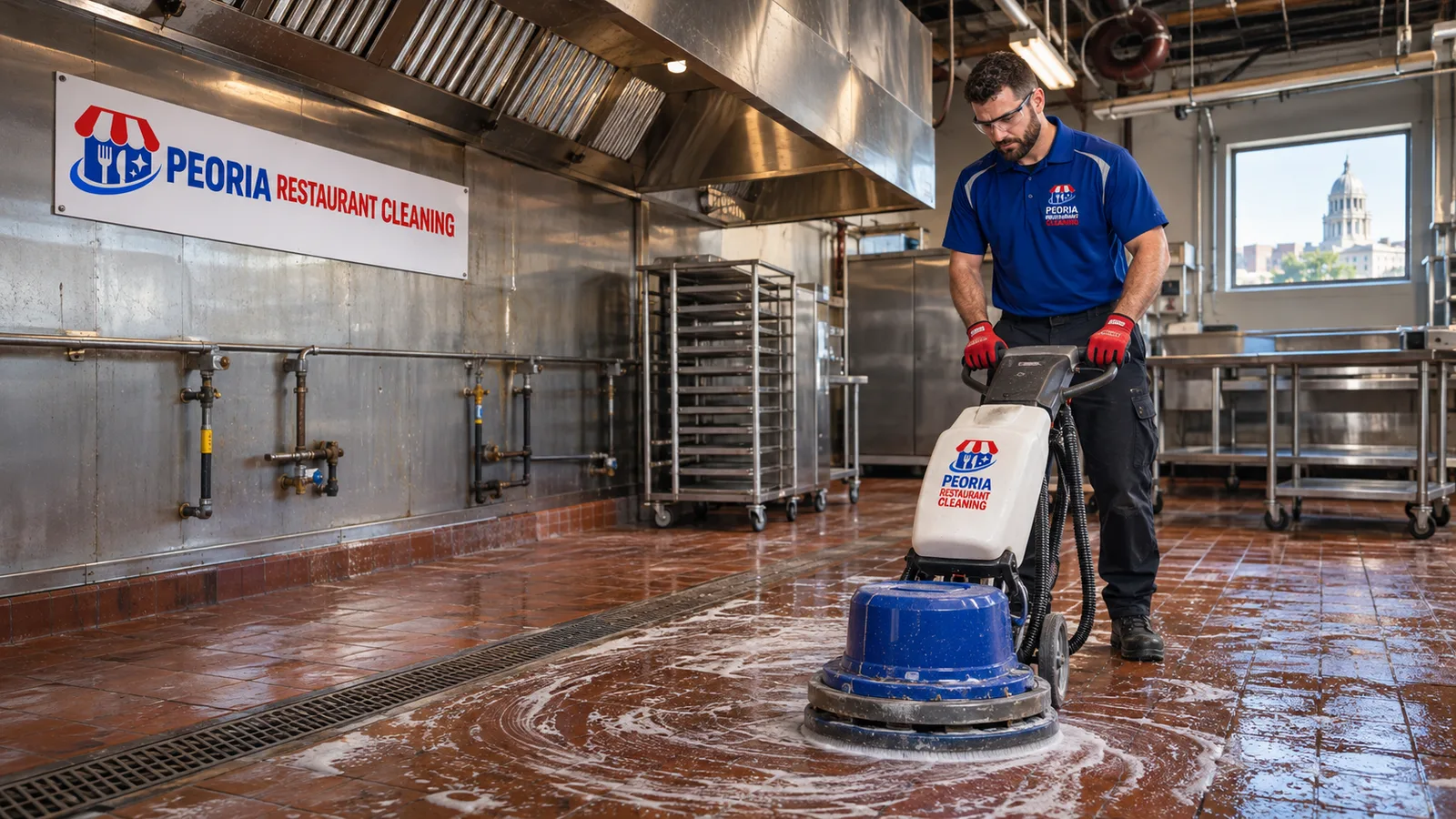
Commercial Kitchen Floor Cleaning has to address more than visible dirt. Cooking oils spread through foot traffic, settle into textured tile and collect in porous grout. Mop water can move that residue across the floor without fully removing it. Over time, the surface may feel tacky, grout lines darken and soil returns soon after routine cleaning.
Peoria Restaurant Cleaning provides deep floor cleaning for restaurant kitchens, prep areas, dishwashing zones and other food-service work areas. Our team of Peoria's restaurant specialists plans the work around the floor material, grease load, access and hours when the kitchen is out of production. The goal is a practical reset that supports the restaurant's regular floor-care routine.
Our Peoria location on SW Washington Street puts us close to downtown food-service businesses where narrow work areas, limited staging space and tightly scheduled access can affect the job plan. We also account for central Illinois weather. Winter slush and deicing residue can add grit near receiving and employee entrances, while wet conditions increase the need for controlled rinsing and complete recovery of cleaning solution.
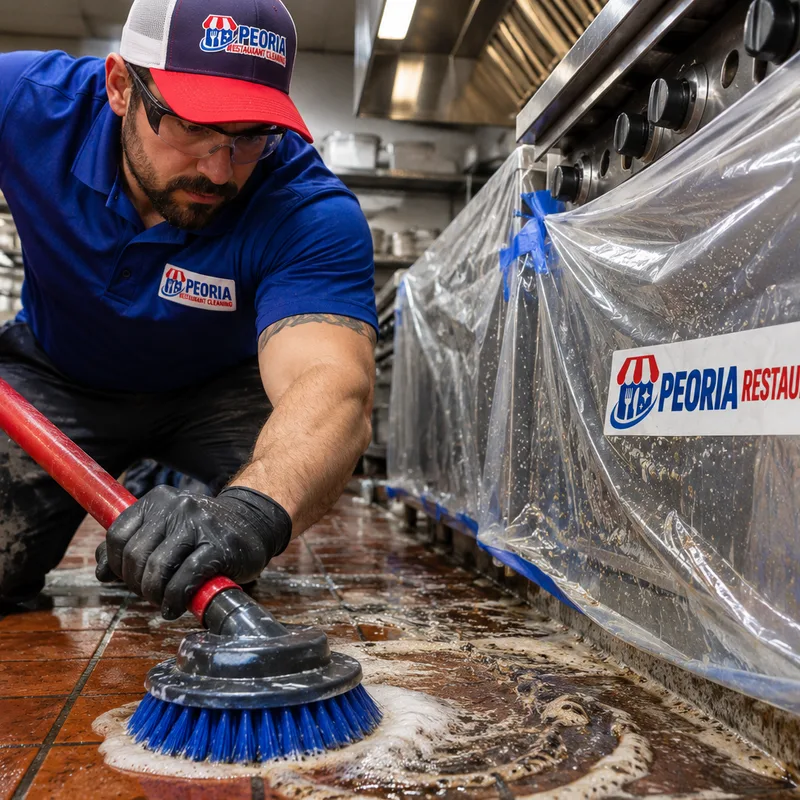
A sound cleaning plan begins by identifying the surface. Commercial kitchens often use quarry tile or other textured tile because it provides durable footing, but recesses in the surface can hold oil and food soil. Ceramic tile, sealed concrete and resilient flooring require different chemical and agitation choices. Natural stone, aluminum thresholds and nearby finishes also need protection from incompatible products.
We inspect the floor, grout condition, edges, corners and buildup around equipment. The cleaning solution is selected for the soil and surface, then given suitable dwell time so grease can loosen before agitation. Rotary equipment, deck brushes or other commercial tools work the solution into textured areas and grout lines. Controlled rinsing and extraction remove the suspended soil rather than leaving dirty solution to dry on the floor.
This process targets floor buildup. It does not repair cracked tile, failed grout, loose coving or drainage defects. Those conditions are identified so restaurant operators can make informed maintenance decisions.
Restaurant floor degreasing loosens oily films and embedded soil near fryers, ranges and food-preparation equipment. Heavy deposits may require repeated application, agitation and recovery.
Restaurant grout cleaning uses focused chemical dwell time and mechanical agitation to release soil held in recessed, porous joints. Permanent discoloration and damaged grout may remain after cleaning.
Hand detailing reaches wall edges, corners, floor transitions and accessible equipment perimeters that routine mopping and larger machines often miss.
Kitchen floor degreasing can include prep rooms and dishwashing zones, where food residue, detergent films and wet traffic contribute to stubborn buildup.
Grit and deicing residue tracked inside during Peoria winters can combine with grease near receiving doors. Proper rinsing and extraction help remove that mixed soil.
After deep cleaning, we can discuss practical mop-water changes, chemical dilution and attention to high-soil zones so daily cleaning does not immediately redeposit grease.
We review the floor type, grease level, grout condition, drainage, equipment access and operating schedule. The written scope identifies the work area and any limits caused by fixed equipment or damaged surfaces.
Loose debris is removed, movable items are cleared when included in the plan and sensitive surfaces are considered before chemicals are applied. Kitchen production must stop in the active work zone.
A compatible cleaner is applied at the proper dilution. Dwell time gives the product a chance to break its bond with greasy soil, but the solution is kept from drying on the surface.
Commercial floor equipment and hand tools work the solution into textured tile, grout joints, corners and other accessible areas. Tool choice depends on the flooring and condition.
Suspended grease and soil are rinsed and extracted. Recovery matters because repeatedly spreading contaminated water can leave residue that attracts fresh dirt.
We inspect accessible work areas, discuss any stains or physical damage that remain and confirm when the floor can return to normal traffic based on its condition.
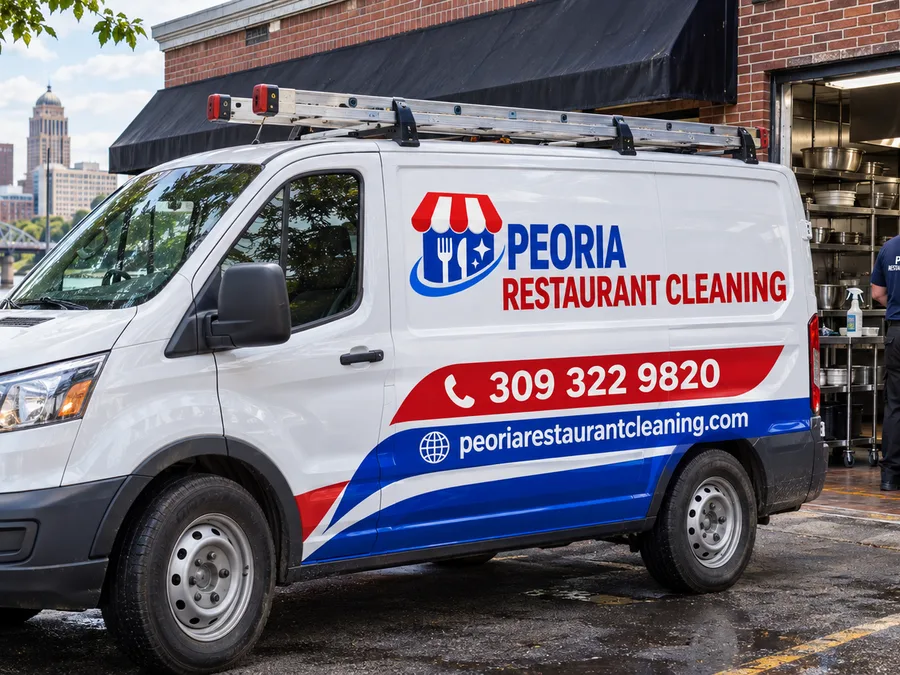
Floor cleaning should be scheduled when food preparation has stopped and employees can stay out of the active work zone. Depending on the kitchen, that may mean service after closing, before production begins or during a planned shutdown. The amount of equipment that must be moved also affects timing. We define those responsibilities before the appointment so the crew can begin work safely and efficiently.
Downtown Peoria restaurants may have compact kitchens, alley receiving access or limited room to stage equipment. Businesses near the Northwoods Mall commercial area may have larger footprints but longer cooking lines and more floor area. East Peoria locations often coordinate service around Illinois River crossings and evening traffic when planning crew and equipment arrival. These operating details shape access and scheduling; they do not change the need for proper surface identification, degreasing, agitation and soil recovery.
The restaurant remains responsible for its food-safety procedures and any requirements set by the Peoria City/County Health Department. Professional floor cleaning supports facility maintenance, but it is not a health inspection or a guarantee of regulatory compliance.
A floor that looks dull or feels tacky shortly after mopping may still hold detergent and grease residue. Common causes include using too much chemical, failing to change dirty mop water, allowing degreaser to dry, skipping the rinse step and using a mop head already loaded with oil. Cold solution may also be less effective against some fatty soils, although water temperature must stay within the flooring and chemical manufacturer's directions.
Deep commercial floor cleaning in Peoria provides a better starting point by removing accumulated soil with mechanical agitation and recovery equipment. Daily maintenance still matters afterward. Staff should follow the product label, use clean tools, change solution as it becomes contaminated and keep fryer oil or food spills from sitting on the floor. Degreasers should never be mixed unless their labels expressly permit it. In particular, mixing incompatible chemicals can release dangerous gases.
A visibly clean floor can still be slippery if it is wet, greasy or coated with chemical residue. Slip resistance depends on the surface texture, footwear, contaminants and maintenance practices, so cleaning cannot promise a slip-proof floor.
Commercial kitchen floor cleaning in Peoria typically costs about $300 to $1,200 per visit, while large kitchens or floors with heavy grease buildup may cost more. Small prep areas with clear access generally fall near the lower end; extensive tile, detailed grout work and cooking-line buildup increase labor.
Final pricing depends on square footage, floor material, soil level, equipment access, chemical requirements and whether service occurs outside normal hours. The exact cost is confirmed after the work area and floor condition are inspected.
Describe the floor material, approximate work area, heaviest grease zones and preferred service window to receive a clear scope for your kitchen.
Call for a Free QuoteMany restaurant kitchen floor cleaning jobs take several hours, but the actual schedule depends on floor area, buildup, grout detail and equipment access. A compact downtown Peoria kitchen may have less floor area yet require more hand work around tight cooking lines. Preparation, dwell time, agitation, extraction and a final review are included when the service window is planned.
The active work area should be out of food production and closed to employee traffic during cleaning. Degreaser, powered equipment, hoses and wet floors make an operating kitchen unsuitable for this work. Peoria restaurants commonly plan service after closing, before prep begins or during another scheduled shutdown.
Movable items should be cleared according to the agreed scope, while gas-connected, hard-plumbed or fixed equipment should be handled only by qualified personnel. We identify accessible floor areas during the inspection. If equipment cannot be moved safely, cleaning is completed around its reachable perimeter rather than disturbing utility connections.
Restaurant grout cleaning can remove substantial greasy soil, but it cannot reverse permanent staining, erosion, cracks or failed grout. Porous joints beside fryers and dish areas may show wear after the soil is removed. We distinguish remaining discoloration from physical damage during the finished-floor review.
Professional degreasing is suitable for quarry tile when the chemical, dilution, dwell time and agitation method are compatible with the tile and surrounding materials. A pre-service inspection checks for damaged grout, exposed metals and adjacent finishes that may need protection. The solution is then rinsed and recovered rather than left to dry.
The right interval depends on cooking volume, fryer use, floor texture, daily cleaning and seasonal soil entering the building. A high-output kitchen may need more frequent deep cleaning than a light-use prep space. Winter grit and deicing residue near Peoria receiving entrances can also justify extra attention to those zones.
No responsible cleaner can guarantee complete stain removal or a slip-proof floor. Professional restaurant floor degreasing removes accessible grease and residue, but damaged surfaces, active spills and contaminants introduced after service still affect traction. Good daily cleaning, prompt spill response and suitable footwear remain necessary.
An accurate quote needs the approximate square footage, floor material, current condition, heaviest soil areas, equipment-access details and preferred service hours. Photos can help with initial planning, but a direct inspection may be needed for heavy grease, damaged grout or a kitchen with limited access.
Talk with our team
Tell Peoria Restaurant Cleaning about your space, operating hours, and cleaning priorities so we can help define the right scope.
Request a quote
After you submit the form, our team will review your details and contact you to discuss the space, schedule, and next steps.