
Dining and Guest Areas
Cleaning can cover tables, chairs, booths, partitions, ledges, counters, doors, glass, and floors. The scope can be adjusted for daily traffic and the way your dining room is arranged.
Serving Peoria, Illinois & surrounding areas
Open 24/7
Keep your kitchen, dining room, restrooms, and high-touch surfaces ready for every shift with a cleaning plan built around your hours and facility.
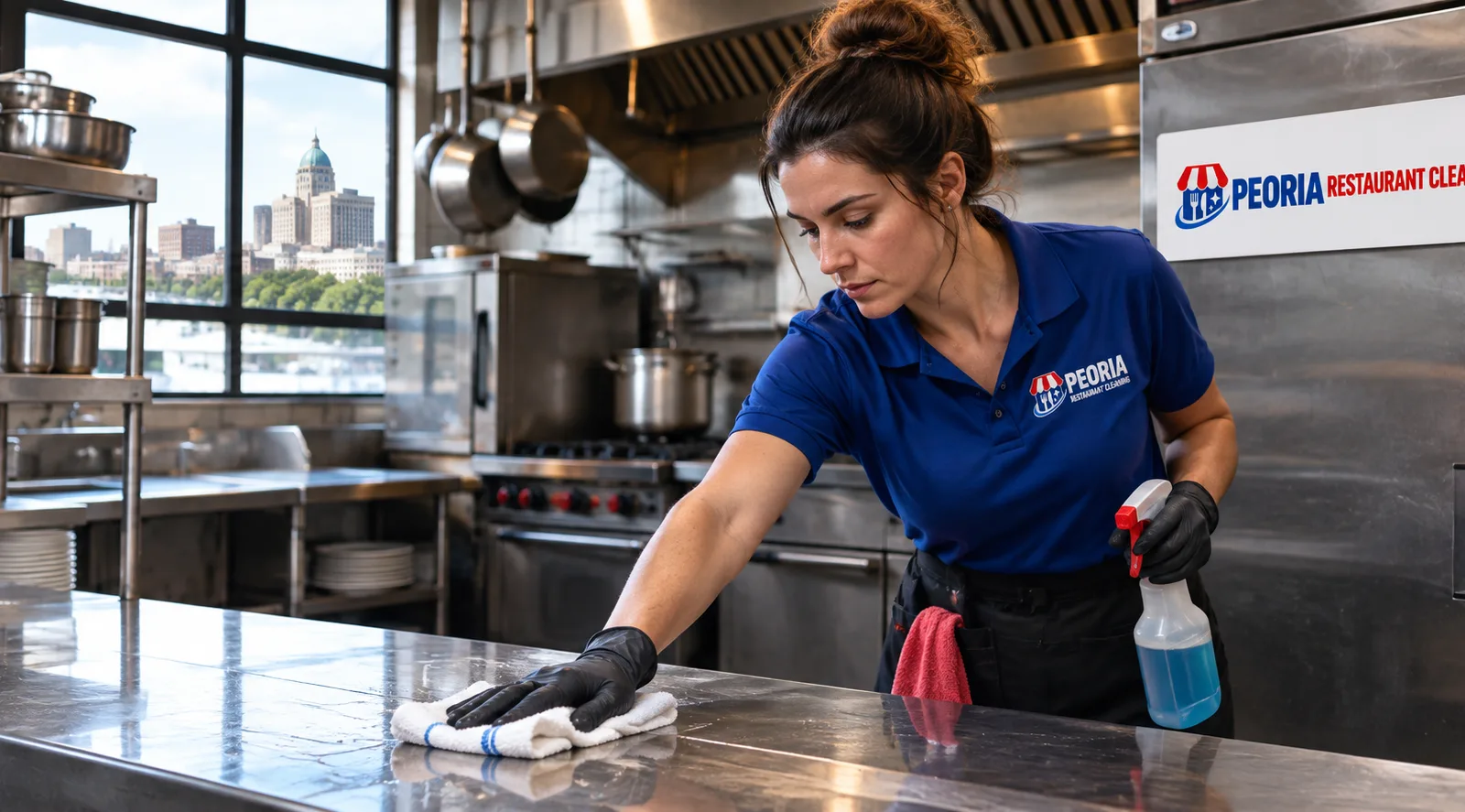
A restaurant needs consistent cleaning without disruption during prep, service, or closing. Peoria Restaurant Cleaning provides Restaurant Cleaning Washington operators can tailor to their floor plan, operating schedule, and areas of concern. We clean customer-facing spaces, back-of-house work areas, restrooms, employee areas, and frequently touched surfaces according to an agreed scope.
Our work starts with a walkthrough and a practical discussion about timing. A quick-service counter has different traffic patterns than a full-service dining room, and a commercial kitchen needs different methods than an entry or office. We identify surfaces, access restrictions, soil levels, and tasks that require special attention before setting the schedule. For every Washington assignment, a restaurant company Peoria homeowners rely on brings the same direct communication and careful planning to the work.
Washington businesses also face the seasonal dirt common across central Illinois. Wet spring conditions and winter salt can quickly mark entry flooring, vestibules, and dining-room traffic lanes. A workable plan accounts for those conditions with entrance detailing, appropriate floor care, and more frequent attention when outdoor soil is being tracked inside.
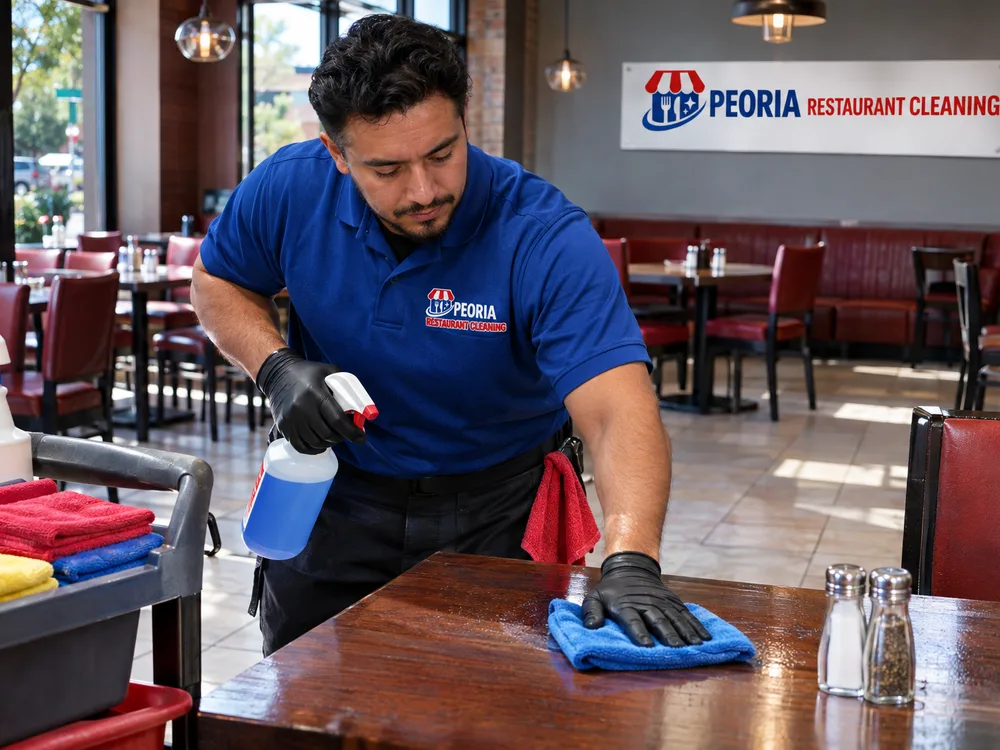
Restaurant cleaning should follow how each area is used. Dining rooms may need tables, seating, ledges, partitions, floors, and visible touchpoints cleaned after guests leave. Host stations, door handles, payment-area surfaces, and pickup counters receive frequent contact and benefit from a consistent task schedule. Restrooms require separate tools and cloths to reduce cross-contamination between cleaning zones.
Back-of-house work can include accessible floors, walls, sinks, shelving exteriors, equipment exteriors, preparation surfaces, and employee areas. Cleaning chemicals must be compatible with the surface and used according to their labels. Food-contact surfaces require the proper clean-and-sanitize sequence, including the sanitizer concentration and contact time stated on the product label. Quaternary ammonium and chlorine-based sanitizers are common examples, but they should never be mixed or used interchangeably without checking instructions.
Our scope distinguishes routine janitorial work from specialized jobs such as exhaust hood and duct cleaning, pest control, grease-trap pumping, or equipment repair. Clear boundaries help managers coordinate each vendor and confirm that required work is assigned.
Cleaning can cover tables, chairs, booths, partitions, ledges, counters, doors, glass, and floors. The scope can be adjusted for daily traffic and the way your dining room is arranged.
Accessible preparation surfaces, sinks, equipment exteriors, splash areas, walls, and floors can be assigned by task. Heavy grease buildup is identified during the walkthrough so the right method can be planned.
Fixtures, partitions, mirrors, dispensers, touchpoints, and floors are cleaned with dedicated tools. Consumable restocking may be incorporated when supplies and responsibilities are agreed in advance.
Vacuuming, sweeping, mopping, spot cleaning, and suitable periodic floor care address tracked soil and spills. Material type, slip risk, finish condition, and manufacturer guidance determine the method.
Door handles, push plates, railings, switches, and other frequently handled points can receive scheduled attention. The task list identifies which surfaces are included and how often they are addressed.
Cleaning can be planned around opening, closing, prep, and delivery windows. Access instructions and alarm procedures are documented before recurring off-hour work begins.
We review the kitchen, dining area, restrooms, entrances, employee spaces, and accessible storage areas. We also note flooring materials, grease-prone surfaces, traffic patterns, and any restricted equipment.
Each task is assigned a frequency, such as every visit, weekly, or periodically. Managers can identify priority areas, inspection concerns, and duties that restaurant staff will continue handling.
We coordinate service windows with prep, deliveries, closing duties, and opening procedures. Access, keys, alarm instructions, locked areas, and on-site contacts are confirmed before work starts.
The crew follows the agreed task list and cleaning sequence. Restroom tools remain separate, chemical labels guide use, and wet-floor controls are used when cleaning occurs around employees.
Restaurant traffic and seasonal conditions change. The scope can be reviewed when operating hours, menus, seating layouts, or soil levels make a different frequency more practical.
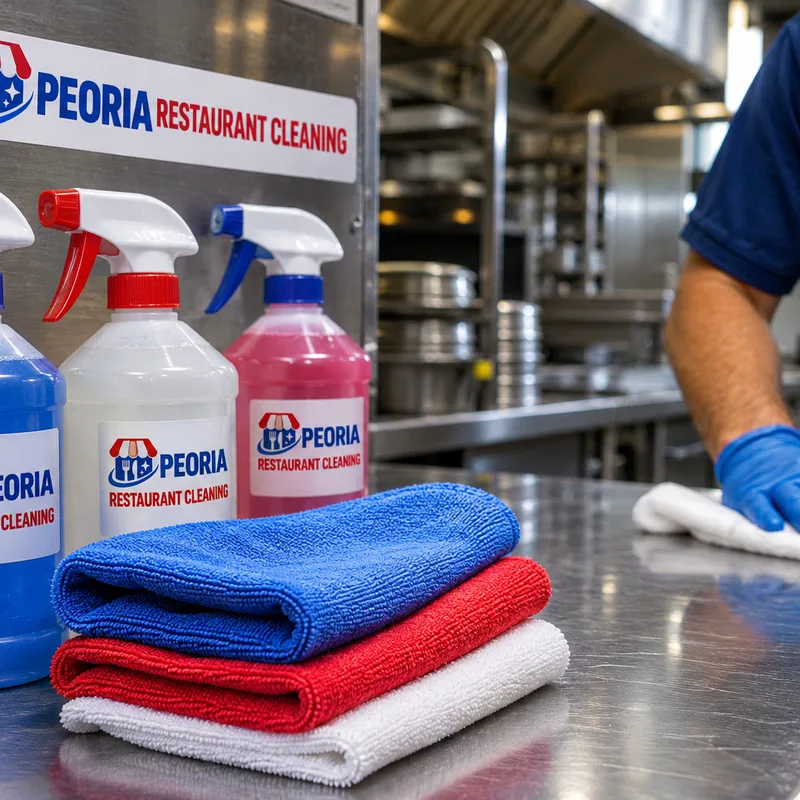
Effective cleaning depends on the soil and the surface beneath it. Greasy kitchen residue may need an appropriate degreaser and dwell time, while finished dining-room flooring may require a neutral cleaner that will not damage the coating. Stainless steel should be cleaned with nonabrasive materials and finished with the grain to limit visible streaking. Natural stone, sealed concrete, luxury vinyl tile, quarry tile, and ceramic tile each have different chemical and maintenance needs.
Cross-contamination controls matter as much as appearance. Color-coded microfiber cloths and mop heads can separate restroom, dining, and kitchen tasks. Fresh solution, clean tools, and an orderly top-to-bottom sequence keep loosened soil from being moved back onto completed surfaces. Sanitizing does not replace cleaning because grease and food residue can interfere with sanitizer contact.
Washington restaurants are generally subject to food-establishment oversight through the Peoria City/County Health Department. A cleaning provider does not replace management's food-safety duties, employee training, or required specialist maintenance. Our role is to follow the defined cleaning scope consistently and report visible conditions that may need management's attention.
Restaurant cleaning is usually quoted after a walkthrough because square footage alone does not define the work. Price depends on the number and size of cleaning zones, service frequency, kitchen soil levels, restroom count, floor materials, furniture density, access, and the time available to complete the scope. A first-time detail clean may require more labor than a recurring visit that follows a maintained schedule.
The estimate should state which areas are included, how often tasks are completed, and whether periodic work is priced separately. Ask how the provider handles consumables, locked rooms, schedule changes, additional cleaning requests, and conditions outside the regular scope. A written task list makes it easier to compare proposals that might otherwise appear similar.
Peoria Restaurant Cleaning can assess the restaurant before confirming the price. That conversation also identifies whether your business needs recurring service, a one-time intensive clean, or a plan that combines frequent core tasks with periodic detail work. The exact cost is confirmed after the walkthrough and scope review.
Get a written cleaning scope built around your restaurant's hours, surfaces, traffic, and priority areas before service begins.
Call for a Free QuoteThe right frequency depends on guest volume, operating hours, menu, in-house closing duties, and the condition of the kitchen and dining areas. High-use floors, restrooms, and touchpoints may need attention every service day, while walls, ledges, and detailed floor work can follow a weekly or periodic rotation. A walkthrough identifies the practical frequency for each task.
Yes, off-hour cleaning can be arranged when access and scheduling allow. The plan should document keys, alarm procedures, locked areas, delivery activity, equipment that remains hot, and the time by which surfaces and floors must be ready for opening or morning prep.
Food-contact surfaces can be included when the scope, products, and responsibilities are clearly defined. These surfaces must first be cleaned and then sanitized with an appropriate product used at its labeled concentration and contact time. Restaurant management remains responsible for its food-safety procedures and for confirming that products suit the operation.
Exhaust hood and duct cleaning should be treated as specialized work rather than assumed to be part of routine janitorial cleaning. During the walkthrough, we distinguish accessible equipment exteriors and surrounding surfaces from hood systems, ducts, rooftop components, grease traps, and equipment interiors that may require qualified specialty vendors.
Visit length depends on the floor plan, number of rooms, soil level, task list, and crew access. A recurring clean of maintained dining and restroom areas takes less time than an initial deep clean involving grease buildup or detailed floor work. The expected service window is established after the Washington location is inspected.
Yes, a split-responsibility plan can leave selected opening, shift, or closing duties with restaurant employees while assigning other work to the cleaning crew. The written scope should identify each party's tasks, especially for food-contact surfaces, spills, waste, restrooms, and end-of-night kitchen work.
Yes, service frequency and task priorities can be adjusted when operating conditions change. Central Illinois snow, slush, and deicing residue can increase entry and floor care needs, while holiday traffic or special events may affect dining-room and restroom use. Planned adjustments help keep the scope aligned with actual conditions.
Talk with our team
Tell Peoria Restaurant Cleaning about your space, operating hours, and cleaning priorities so we can help define the right scope.
Request a quote
After you submit the form, our team will review your details and contact you to discuss the space, schedule, and next steps.