
Cooking Line
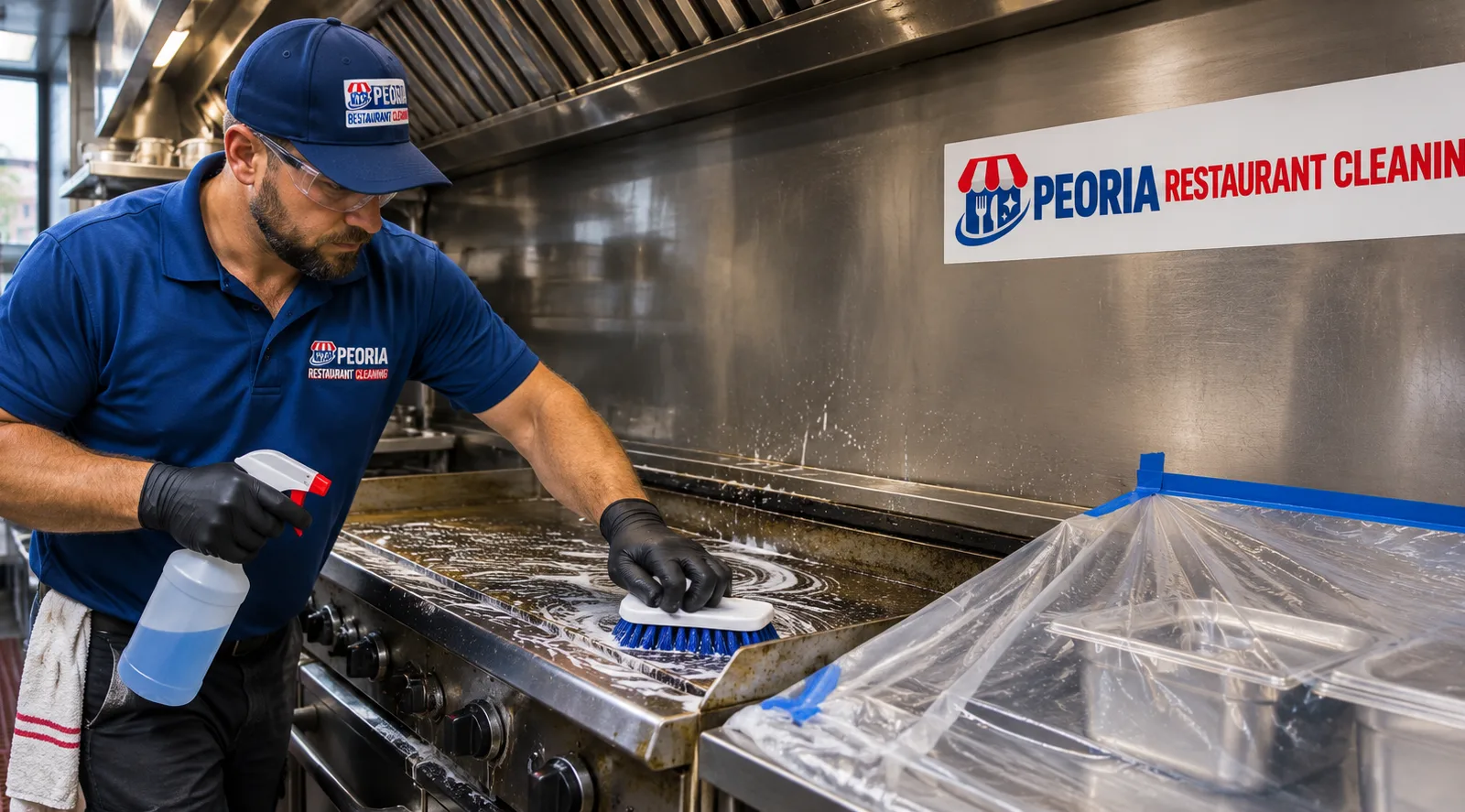
Degreasing for accessible exteriors, backsplashes, equipment sides, knobs, handles, legs, casters, and the floor beneath movable units. Heavy carbon deposits are assessed before scraping or chemical treatment.
Serving Peoria, Illinois & surrounding areas
Open 24/7
Detailed commercial cleaning for cooking lines, equipment, floors, walls, and hard-to-reach areas, planned around your operating schedule.
Grease, carbon, food residue, and tracked-in soil collect quickly in a commercial kitchen. Kitchen Cleaning Services address the areas that routine shift cleaning may not fully reach, including equipment sides, casters, floor edges, wall junctions, and spaces beneath the cooking line.
Peoria Restaurant Cleaning develops the scope around your kitchen layout, equipment, operating hours, and current condition. As restaurant specialists serving Peoria, IL, we plan the work to reduce interference with prep, service, receiving, and opening procedures. A small café near Downtown Peoria may need a different schedule and equipment list than a larger restaurant serving the Northwoods Mall area or a busy operation in East Peoria.
The process begins with a clear review of what will be cleaned and which items require special handling. We distinguish food-contact surfaces from non-food-contact surfaces, account for hot equipment and electrical components, and identify items that staff must shut down, empty, or cool before work starts. That preparation keeps the scope practical and helps your crew know what to expect.
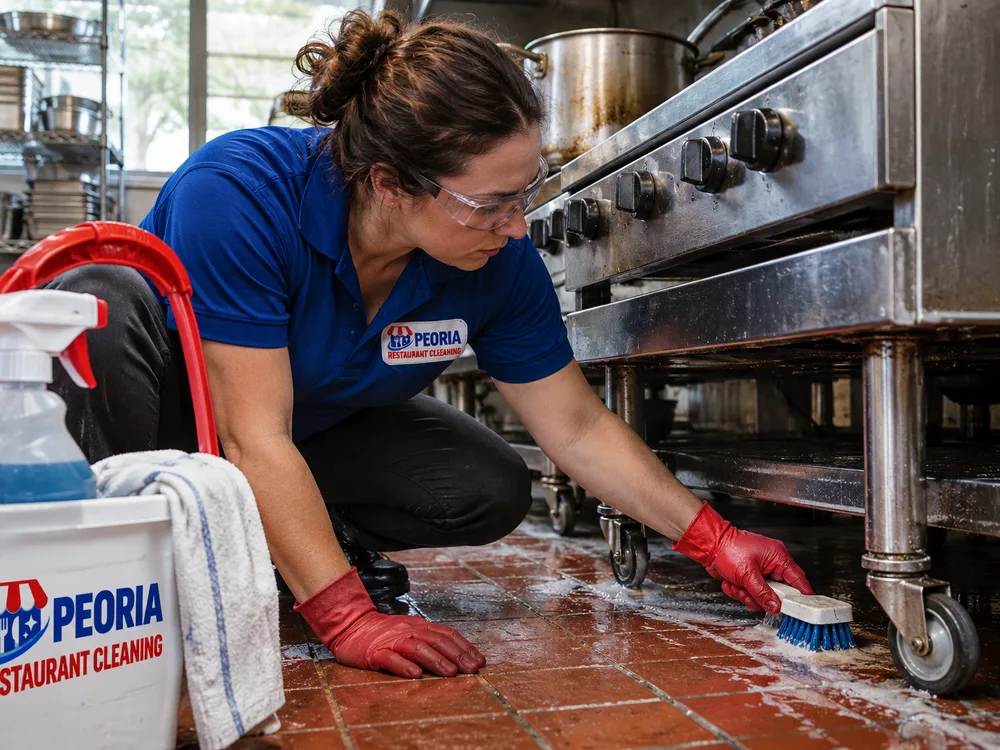
A commercial kitchen deep cleaning can be tailored to the whole back-of-house space or a defined set of problem areas. Common work includes degreasing cookline exteriors, cleaning equipment legs and casters, removing buildup beneath movable units, washing walls and splash areas, scrubbing floors, and detailing corners around fixed equipment.
Kitchen equipment cleaning may include the exterior and accessible components of ranges, fryers, ovens, griddles, prep tables, refrigerators, freezers, shelving, sinks, and dishwashing areas. Equipment is handled according to its construction and condition. Stainless steel requires methods that avoid scratching the grain, while painted surfaces, control panels, gaskets, and electrical connections need limited moisture and suitable products.
The written scope should identify exclusions as clearly as inclusions. Internal mechanical repairs, electrical work, pest treatment, and specialized exhaust-system service are separate tasks. A defined scope lets managers compare proposals accurately and assign remaining duties to staff or other qualified vendors.
Degreasing for accessible exteriors, backsplashes, equipment sides, knobs, handles, legs, casters, and the floor beneath movable units. Heavy carbon deposits are assessed before scraping or chemical treatment.
Cleaning for prep-table bases, shelving, sink surrounds, wall surfaces, and accessible refrigerator or freezer exteriors. Food and utensils must be protected or relocated before work begins.
Mechanical scrubbing or detailed hand cleaning can address grease films, soil near coving, grout lines, corners, and routes between the cookline, dish area, storage, and receiving.
Work can target splash residue, floor buildup, wall surfaces, equipment exteriors, and difficult edges around sinks and dish machines. Scale and grease may require different chemistry.
Washable walls, doors, handles, switches, ledges, and reachable overhead surfaces can be added where material and access permit. Electrical fixtures require controlled moisture.
Recurring visits can rotate deep-cleaning tasks so managers do not need to close the entire kitchen for every service. Frequency depends on menu, volume, staffing, and equipment arrangement.
We discuss the facility, operating schedule, equipment, difficult areas, and any recent inspection concerns. For locations near Downtown Peoria, loading access and limited service windows may also affect setup and timing.
The plan identifies rooms, equipment, surfaces, access requirements, exclusions, and the expected level of cleaning. It also states what your staff should empty, shut down, cool, or move before arrival.
Food, utensils, packaging, and clean wares are removed or protected. Equipment is checked for safe working temperatures, and cleaning methods are matched to stainless steel, tile, grout, rubber, plastic, or painted finishes.
Approved products are given suitable dwell time, then buildup is loosened with pads, brushes, scrapers, or floor equipment selected for the surface. Soil and cleaning residue are removed rather than spread into adjoining areas.
We review the cleaned areas against the agreed scope and note any permanent staining, damaged finishes, inaccessible spaces, or maintenance issues that cleaning cannot correct. Managers receive a practical basis for planning the next service.
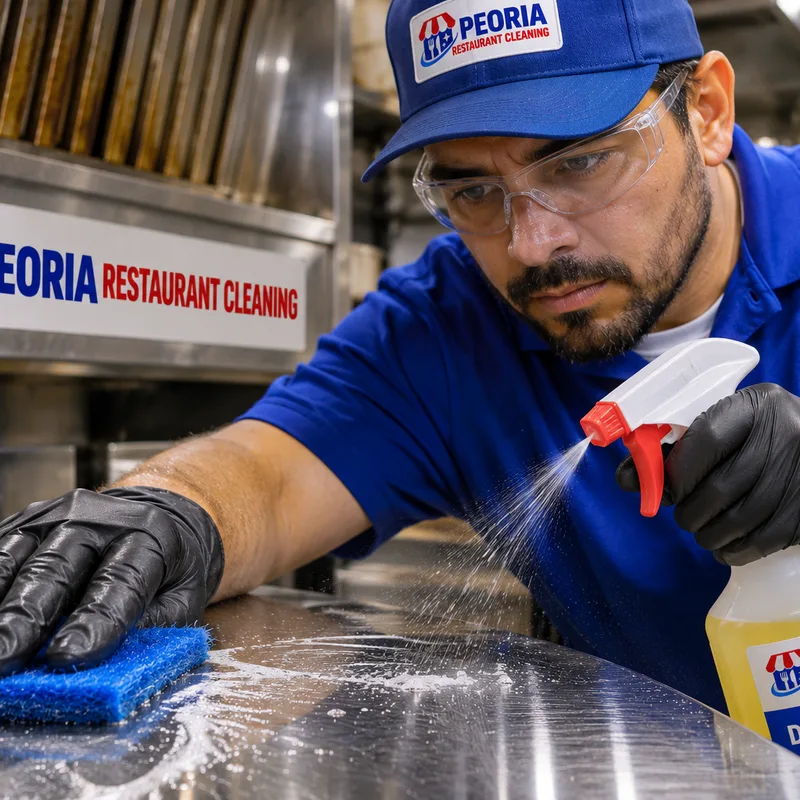
Professional kitchen cleaning starts with the right chemistry and enough dwell time to break down soil. Alkaline degreasers are commonly used on suitable grease-covered surfaces, while mineral scale around wet areas may call for a different product. Chemicals should never be mixed, and product labels and safety data sheets guide dilution, ventilation, personal protective equipment, and surface compatibility.
Agitation is equally important. Brushes reach grout and textured flooring, non-scratch pads protect appropriate finished surfaces, and scrapers must be chosen carefully to avoid gouging metal or tile. Hot water can improve grease removal where the surface and equipment permit it, but uncontrolled spraying near motors, outlets, controls, or open connections creates avoidable risk.
Cleaning and sanitizing are separate steps. A surface must first be cleaned so the sanitizer can contact it effectively. Food-contact areas require products and procedures suitable for that use, including any label-directed rinse, concentration, and contact time. Our approach is based on the actual soil and surface, not one chemical applied throughout the kitchen.
Local operating conditions affect when and how work is scheduled. Downtown Peoria restaurants may have compact back-of-house layouts, shared service access, and narrow delivery windows, so staging must stay controlled. Businesses around the Northwoods Mall commercial district may work around customer traffic and later operating hours. East Peoria restaurants near major retail and entertainment destinations can face busy event-driven periods that make advance scheduling useful.
Central Illinois weather adds practical floor-care concerns. Winter snow, slush, and deicing residue can be tracked through receiving and staff entrances, while wet spring conditions increase soil at thresholds. Once mixed with kitchen grease, that residue can leave a stubborn film in traffic lanes. The cleaning plan can give extra attention to entry routes, mats, floor edges, and the path between receiving, storage, and prep.
The Peoria City/County Health Department is the local public-health authority for food establishments in Peoria County. Cleaning services can help maintain orderly conditions, but a vendor cannot promise an inspection result. Management remains responsible for food handling, equipment maintenance, employee practices, pest control, and compliance with applicable requirements.
Request a CallbackCommercial kitchen cleaning in Peoria typically ranges from about $500 to $2,500 for a planned deep clean, while larger kitchens or heavy grease and carbon buildup may cost more. A limited cookline or floor-focused service may fall toward the lower end; whole-kitchen detailing takes more labor.
Final pricing depends on kitchen size, soil level, equipment quantity, access, required moving, surface condition, service frequency, and overnight scheduling. Exhaust-system work or internal equipment cleaning may require a separate scope. The exact cost is confirmed after a kitchen review or consultation.
A walkthrough and written scope give you a clear equipment list, preparation requirements, schedule, and price before cleaning begins.
Call for a Free QuoteThe right frequency depends on cooking volume, menu, equipment layout, and how much detailed cleaning the staff completes between visits. Fry-heavy operations may need cookline and floor attention more often than low-grease kitchens. Peoria managers can use visible buildup, manufacturer guidance, internal cleaning logs, and feedback from the Peoria City/County Health Department to set a practical schedule.
After-hours service may be available when access, staffing, equipment cooldown, and the requested scope allow it. Fryers, griddles, ovens, and ranges need adequate cooling before safe cleaning. Downtown Peoria locations should also account for loading access, building rules, alarms, and the time needed to reset the kitchen before morning prep.
Interior cleaning can be included for specific equipment when the model, condition, access, and manufacturer instructions support it. The scope should state whether each item receives exterior detailing, accessible-component cleaning, or interior cleaning. Gas, electrical, refrigeration, and mechanical repairs must be handled by the appropriate qualified technician.
Staff generally need to remove or protect food, utensils, packaging, and clean wares, then shut down and cool listed equipment before arrival. The agreed preparation list may also cover emptying refrigerators, unlocking service areas, securing valuables, and identifying equipment that cannot be moved. Clear preparation reduces delays during a short overnight service window.
Deep cleaning removes removable soil, but it cannot reverse corrosion, etched tile, worn coatings, damaged grout, heat discoloration, or grease absorbed into deteriorated materials. A pre-service review helps separate cleanable buildup from permanent wear. We can document those conditions so management can decide whether repair or replacement is appropriate.
Exhaust hoods, filters, fans, and duct systems require a clearly defined scope and may need specialized service based on the system and applicable requirements. General cleaning may address accessible exterior surfaces without including the internal exhaust path. Ask for each component to be listed in writing so there is no confusion about coverage.
Yes, a kitchen cleaning company can build a focused scope around selected floors, cooking equipment, prep areas, or dishwashing spaces. This approach can fit a corrective cleaning need or a rotating maintenance plan. The proposal should still identify preparation duties, access limitations, and which adjacent surfaces are excluded.
Talk with our team
Tell Peoria Restaurant Cleaning about your space, operating hours, and cleaning priorities so we can help define the right scope.
Request a quote
After you submit the form, our team will review your details and contact you to discuss the space, schedule, and next steps.