
Cooking-Line Exteriors
Ranges, ovens, fryers, flat-top surrounds, hot holding equipment, and other accessible exterior surfaces can be degreased without saturating controls or electrical openings.
Serving Peoria, Illinois & surrounding areas
Open 24/7
Professional cleaning for commercial cooking equipment, prep areas, and hard-to-reach surfaces, scheduled around your kitchen's operating hours.
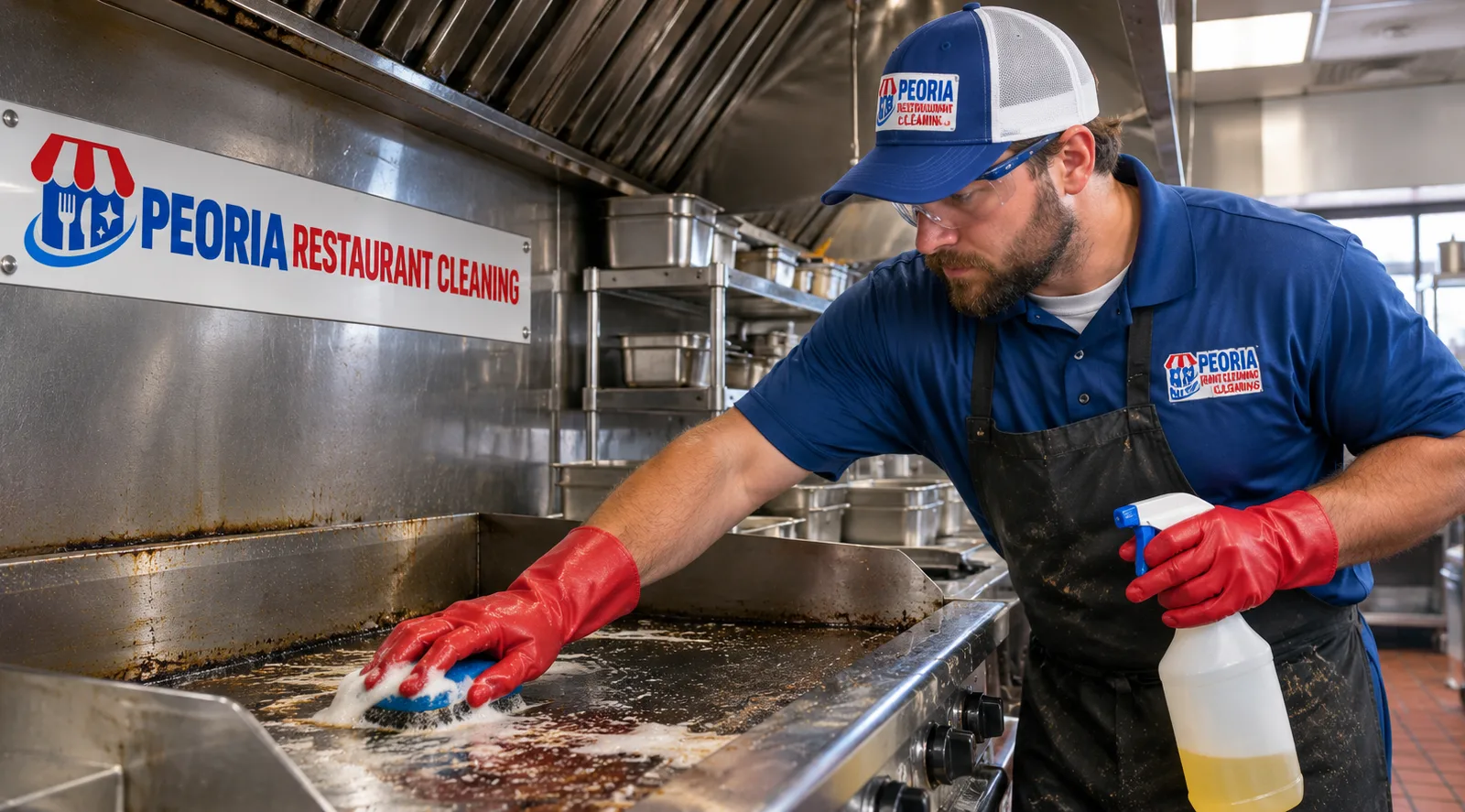
Restaurant Equipment Cleaning Pekin helps operators address the grease, carbon, food residue, and dust that routine shift cleaning may leave behind. Peoria Restaurant Cleaning works with restaurants, cafés, bars, institutional kitchens, and other food-service operations that need detailed attention to equipment exteriors, accessible components, floors, walls, and prep surfaces.
Our team begins by discussing how the kitchen operates, which appliances need attention, and when work can occur without disrupting service. Working as Peoria's local restaurant service, we plan each job around the actual equipment and conditions rather than applying one generic checklist. Our Peoria base at 428 SW Washington St, Suite 4 provides a practical starting point for serving businesses in nearby Pekin.
Central Illinois weather creates seasonal demands for restaurant cleaning. Winter slush and road salt can be tracked into receiving and kitchen areas, while warm, humid periods can make greasy buildup more noticeable. A recurring plan can account for those changes and for busy dates when the kitchen has less time for detailed work.
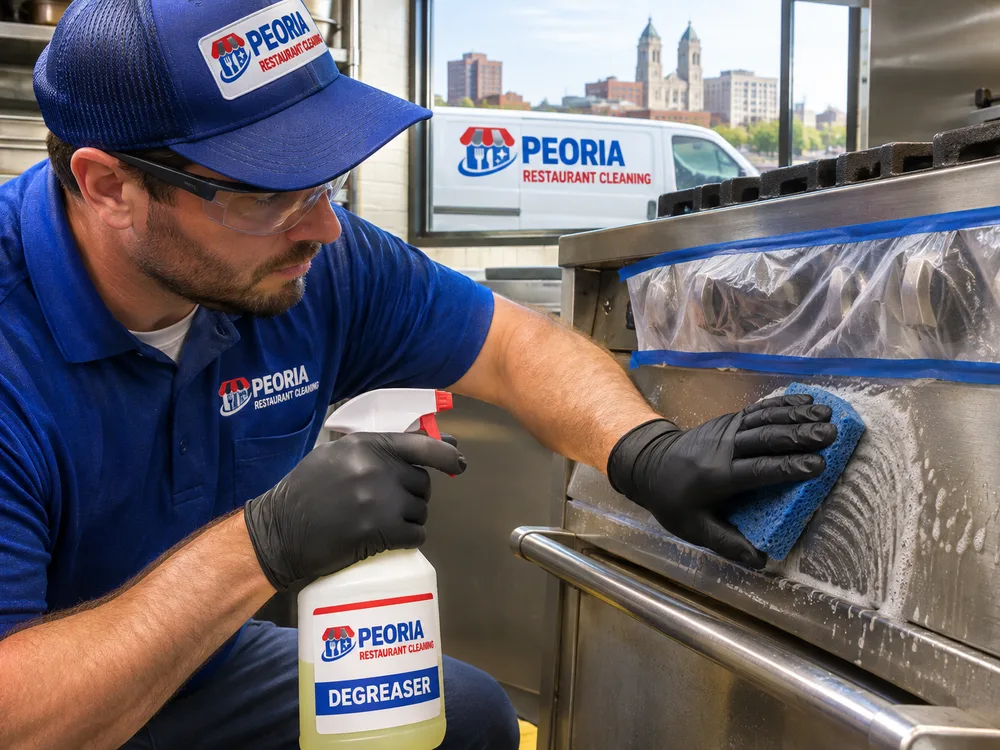
The scope is built around the equipment present and the manufacturer's care requirements. Common work includes degreasing range and fryer exteriors, cleaning removable grates and trays, wiping stainless steel panels, removing residue around control surfaces, and addressing accessible areas beside or beneath movable units. Prep tables, shelving, sinks, backsplashes, walls, floors, and floor edges can be included when they are part of the agreed scope.
Different soils require different methods. Alkaline degreasers are commonly used on compatible surfaces to break down fats and oils. Carbonized residue may need dwell time and careful manual agitation. Stainless steel should be cleaned with the grain using non-damaging tools, then rinsed or wiped as the product label directs. Painted panels, aluminum, rubber seals, electrical controls, and food-contact surfaces each need suitable chemistry and handling.
This work does not replace appliance repair, internal mechanical service, pest control, or certified exhaust-system cleaning. If a technician finds a loose seal, damaged cord, active leak, or other maintenance concern, the issue should be referred to the appropriate qualified provider rather than cleaned around and ignored.
Ranges, ovens, fryers, flat-top surrounds, hot holding equipment, and other accessible exterior surfaces can be degreased without saturating controls or electrical openings.
Compatible grates, racks, trays, drip pans, and similar removable parts can receive focused cleaning according to their condition and material.
Prep tables, sinks, shelving, carts, and backsplashes can be cleaned to remove food residue, grease film, and soil around joints and edges.
Floor edges and accessible spaces around or beneath safely movable equipment can be scrubbed after loose debris and heavy residue are removed.
Stainless steel and other compatible appliance panels are cleaned using tools that limit scratching and streaking.
Handles, knobs, switches, and touch points receive careful attention with moisture controlled around sensitive components.
We identify the appliances, surfaces, buildup, access limits, and operating schedule. The review also separates cleaning tasks from repairs or specialty services that require another provider.
The plan states what will be cleaned, which accessible components are included, and whether equipment movement or shutdown time is needed. Your staff can prepare food and utensils for protected storage before work begins.
The crew follows equipment shutdown instructions, controls overspray, protects sensitive areas, and keeps cleaning products separate from exposed food. Safety data and product-label directions guide chemical use.
Heavy debris is removed first. Degreaser receives suitable dwell time, residue is agitated with compatible tools, and surfaces are wiped, rinsed, or dried as required. Floors are normally completed after equipment work.
The agreed areas are checked before the kitchen returns to normal use. Any inaccessible buildup, damaged component, or condition requiring maintenance is identified for the operator.
A useful cleaning plan respects prep, service, cooling, and reopening times. Some kitchens prefer work after closing, while others have a weekly dark period that allows equipment to cool and removable parts to be handled safely. The right timing depends on appliance shutdown requirements, the amount of buildup, ventilation, and how quickly cleaned surfaces must be ready for use.
Before the appointment, staff may need to remove food, utensils, paper goods, and small appliances from the work zone. Fryers and other heat-producing equipment must have enough time to cool. Gas or electrical disconnection should be performed only when the equipment instructions and qualified personnel allow it. Large units should not be moved if doing so could strain a utility connection, damage a floor, or create a tipping hazard.
For operations near Pekin's downtown commercial area, access and closing times can shape crew arrival and loading. Businesses along major corridors such as Court Street may have different traffic and delivery considerations than kitchens in quieter commercial locations. Discussing entrances, parking, alarm procedures, and key access in advance helps the visit start on time.
Commercial kitchens vary widely. A small café with light-duty appliances does not require the same labor as a high-volume line with several fryers, ranges, and equipment packed tightly against walls. Pricing and timing should reflect the number of units, soil level, access, appliance temperature, removable components, and surrounding surfaces included.
Ask whether the estimate identifies exclusions as clearly as included work. Exhaust hoods, ducts, rooftop fans, internal appliance components, fire-suppression systems, and grease interceptors may require separate scopes or qualified specialists. Equipment cleaning should never be represented as a substitute for inspections, maintenance, or procedures required by an authority having jurisdiction.
Frequency also matters. A one-time deep cleaning can address accumulated residue, while recurring service keeps the workload more predictable. The schedule may differ across a kitchen: fryer surrounds can need attention more often than storage shelving, and floors around the cooking line can require a different method than customer-area flooring.
Request a CallbackDescribe your equipment, operating hours, and problem areas so Peoria Restaurant Cleaning can prepare a practical scope for your Pekin kitchen.
Call for a Free QuotePricing is based on the number and type of appliances, soil level, access, requested surfaces, and the time available for safe work. A lightly soiled prep area takes less labor than a cooking line with carbonized residue around several fryers and ranges. Photos can help with initial planning, but an accurate scope requires enough detail to identify equipment, removable parts, and access limits.
Some isolated work may be possible during non-peak hours, but detailed cleaning is usually safer and more effective when the affected equipment is shut down, cool, and outside active food preparation. Pekin operators often plan service around closing hours or a scheduled dark period. The exact arrangement depends on kitchen traffic, ventilation, and appliance instructions.
Do not move heavy commercial appliances unless the equipment, utility connections, and floor conditions allow it safely. The crew can discuss which light or mobile units may be repositioned and which areas are accessible without movement. Gas lines, hardwired connections, casters, anti-tip devices, and floor transitions can all affect that decision.
Food-contact surfaces can be included when they are identified in the scope and treated with products and procedures suitable for that use. Food, utensils, and packaging should be removed or protected before cleaning. The crew follows product-label requirements for rinsing, wiping, and drying before the area returns to service.
Equipment cleaning does not automatically include the complete exhaust system. Hoods, filters, ducts, rooftop fans, and fire-suppression components may require a separate specialty scope. The estimate should state whether any accessible hood surfaces or filters are included and should distinguish that work from full exhaust-system cleaning.
The appropriate frequency depends on cooking volume, menu, appliance type, staff cleaning routines, and how quickly grease or carbon returns. Fryer-heavy kitchens may need shorter intervals around the cooking line than cafés with limited hot-food preparation. A first visit can establish the condition of each area and support a practical recurring schedule.
Remove exposed food, utensils, smallwares, paper products, and personal items from the work area. Shut down and cool appliances at the agreed time, and provide access to the relevant rooms, water, and approved waste areas. If the work occurs after hours in Pekin, confirm entry, alarm, parking, and lockup instructions before the crew arrives.
Talk with our team
Tell Peoria Restaurant Cleaning about your space, operating hours, and cleaning priorities so we can help define the right scope.
Request a quote
After you submit the form, our team will review your details and contact you to discuss the space, schedule, and next steps.